Many travelers love the idea of waking up to the sound of hippos or the distant roar of a lion, but they hesitate when they see the price tag. The big question is usually the same: does a luxury safari tent camp really deliver hotel-level comfort, or are you paying a premium for little more than canvas walls and a bucket shower?
The honest answer is that the best camps deliver both romance and genuine comfort, but the details vary enormously from one property to the next. In this guide, we break down what a luxury safari tent camp actually costs, what is typically included in the rate, and what you can expect inside the tent itself. We also look at camp size and atmosphere, the best time to go and how far ahead to book, how to judge value before you commit, and the bottom line on whether the price feels justified.
What a Luxury Safari Tent Camp Actually Costs
Luxury safari tent camp rates typically range from $350 to $1,500 per person per night, and most camps quote these prices on an all-inclusive basis. That means the number you see on a website usually covers far more than just the tent itself, which is why comparing rates between camps can be confusing until you understand exactly what each one bundles in.
Timing makes a dramatic difference to what you pay. The peak dry season, running from June to October, pushes rates 30-50% higher than the green season. These months coincide with the best wildlife viewing, so camps can charge a premium and still fill their tents. If your dates are flexible, shifting your trip by even a few weeks can change the total cost significantly.
The extras that catch travelers off guard
Two line items deserve special attention before you book. First, solo travelers often face a single supplement, which can add noticeably to the base rate since camps price tents on double occupancy. Second, park concession fees are frequently quoted separately from the nightly rate, even when the rate is described as all-inclusive. Ask the camp or your operator to itemize these charges so you can compare true total costs rather than headline prices.
What’s Included in the Rate
At most luxury camps, all-inclusive pricing typically covers all meals, house drinks and two daily game drives, usually one in the early morning and one in the late afternoon when wildlife is most active. This structure is why the nightly rate looks high at first glance: you are effectively paying for accommodation, full board, an open bar and guided activities in a single figure.
Higher-end camps often go further and bundle services that mid-range properties charge for separately. Guided bush walks, daily laundry service and light-aircraft transfers from the nearest airstrip are the most common additions at the top of the market. When a camp includes the flights, the gap between its rate and a cheaper competitor’s can shrink or even reverse once you price everything out.
That said, not everything is covered. Expect to pay extra for the following, and budget for them before you travel:
- Premium wines and champagne: house drinks are included, but top-shelf labels, vintage wines and champagne usually appear on a separate cellar list with their own pricing.
- Spa treatments: many camps have a therapist on site, with massages and treatments charged per session and often booked in advance because slots fill quickly.
- Private vehicles and private guides: sharing a game-drive vehicle is standard, but if you want a vehicle exclusively for your party, camps typically charge a daily fee that should be reserved well ahead.
Before booking, ask for a written list of inclusions and exclusions. It is the single best way to compare camps on a like-for-like basis.
Inside the Tent: Comforts You Can Expect
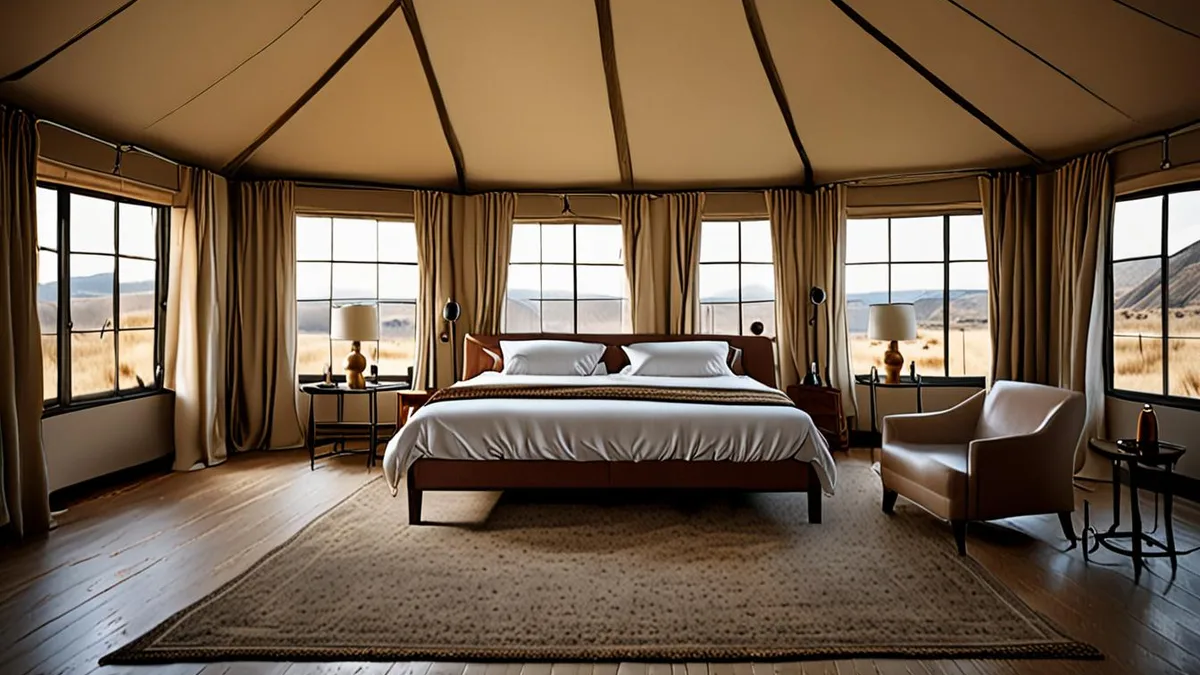
Forget any image of camping you have from home. Tents at this level usually span roughly 40 to 100 square meters, which puts many of them in the same size bracket as a hotel suite. Expect a proper king bed on a solid base, en-suite bathrooms with flushing toilets and hot running water, and outdoor showers that have become something of a signature of the safari experience.
Power, connectivity and daily service
The practical comforts are standard at this level too. Solar power runs the lights and charges your devices, Wi-Fi is available in common areas, and nightly turndown service means you return from dinner to a prepared bed and a hot water bottle in most camps. Days follow a familiar rhythm: an early wake-up call, tea or coffee delivered to your tent, a game drive, a generous brunch, and free time before the afternoon activity.
What separates top-tier tents from mid-range ones are the extras built onto the canvas. A private deck facing the waterhole is close to universal at the luxury level, but plunge pools, outdoor bathtubs and star beds are the features that distinguish the most expensive tents. If those details matter to you, check the tent descriptions carefully, because within a single camp the top and bottom categories can differ more than you might expect.
Camp Size and Atmosphere
One of the first things you notice at a luxury safari camp is how few other guests there are. Most camps in this class host just 8 to 20 tents, which means you might share the entire property with only a dozen or so other travelers. The result is a quiet, almost private atmosphere where you hear hyenas at night instead of poolside music.
Small guest numbers change the safari experience in practical ways, too. With fewer vehicles to coordinate, camps can be flexible about game-drive schedules, so you can linger with a leopard sighting or leave earlier to catch a kill at dawn. Guides also get to know their guests, and a good guide will adjust each drive to your interests, whether that’s birds, big cats or photography.
Communal meals and campfire evenings
Don’t expect large hotel-style facilities here. Most camps have no gym, no multiple restaurants and often no pool beyond a small plunge pool. Instead, guests typically gather around a long communal dining table for meals, and evenings end at the campfire with drinks and stories about the day’s sightings. If you want total privacy, some camps can arrange a private dinner in your tent or on your deck, but the shared atmosphere is part of the charm for most travelers. Solo travelers and couples often find the communal setup makes it easy to swap tips with other guests about what they saw that day.
When to Go and How Far Ahead to Book
Timing shapes both what you’ll see and what you’ll pay. Wildlife viewing is generally at its best during the June-to-October dry season, when animals gather around permanent water sources and thinning vegetation makes them easier to spot. This is also when camps charge their highest rates, so expect to pay a premium for those postcard conditions. The green season from November to May brings lower prices, dramatic skies, lush landscapes and plenty of newborn animals, which also means active predators. The trade-off is practical: rain can leave some roads muddy or impassable, and animals disperse more widely, so sightings can be more scattered and game drives a little less predictable. For many travelers, that mix of value and atmosphere is exactly the appeal.
- Decide what matters most to you. If seeing dense concentrations of wildlife is the priority, aim for the dry months of June to October. If you’re chasing value, baby animals and fewer vehicles at sightings, the green season will likely suit you better.
- Check your dates against the season. Once you know your travel window, confirm which season it falls into, since that determines both pricing and how far ahead you need to plan.
- Book early for peak season. The most sought-after camps in the dry season fill up far in advance, so aim to reserve 9 to 12 months ahead if you want your first choice of camp and tent.
- Move faster for green-season trips. Off-peak, 3 to 6 months of lead time can be enough, and last-minute deals occasionally appear, though availability at specific camps is never guaranteed.
One more tip: if you’re set on a specific camp or a specific tent, treat the booking window as a floor rather than a ceiling. The smallest, most atmospheric camps often have the fewest tents to go around, and the most popular units, such as those with the best views or extra privacy, are usually the first to be reserved. Early planning pays off most there. It also gives you time to coordinate flights, internal transfers and any special requests with the camp before the calendar fills up.
How to Judge Value Before You Book
Two camps can look similar on paper and deliver very different experiences, so it pays to look past the headline rate before you book. The nightly price is only meaningful once you know what sits behind it, and in this price bracket the differences between camps usually come down to inclusions, staffing and size rather than the canvas itself. A tent with the same square meters and the same view can feel completely different depending on who is running it and how many other guests are sharing the experience with you.
Start by comparing what’s bundled into each quote. A camp that includes light-aircraft transfers, all drinks and guided walks can easily work out better value than a cheaper base rate where each of those is billed separately. Ask the operator or camp directly for a written breakdown so you are comparing like with like. Then dig into the details below:
- Tent count. A camp with 8 to 20 tents generally offers a quieter, more personal stay than a larger property, and fewer guests often means more flexible game drives.
- Guide-to-guest ratio. Ask how many guests share each vehicle and guide. A low ratio usually means a better seat, more time at sightings and a guide who tailors drives to you.
- Recent reviews, not just ratings. Look for comments from the last year or two about staffing consistency, food quality and how the camp handled problems, since ownership and management can change.
- Length of stay. Plan a minimum of 3 to 4 nights per camp. Transfers between camps take time and money, so shorter stays dilute the value of every night you do pay for.
Finally, put the quotes side by side on a per-day basis with everything included. Once transfers, drinks and activities are accounted for, the “expensive” camp is sometimes the cheaper one, and the stay is usually smoother for it. Taking an hour to do this comparison before booking is one of the simplest ways to make a significant investment feel well spent.
The Bottom Line on Safari Tent Luxury
If you have ever wondered whether a luxury safari tent camp truly delivers hotel-level comfort, or simply canvas walls at a premium price, the honest answer is that it offers both romance and real comfort. Think king beds, en-suite bathrooms, outdoor showers and attentive service, all wrapped in the sounds of the bush. At $350 to $1,500 per person per night, all-inclusive, you are paying for an experience no city hotel can replicate.
Whether that price feels justified comes down to two things: timing your trip well and reading the inclusions carefully before you book. A camp that bundles transfers, drinks and activities can outshine a cheaper base rate, and traveling outside the June-to-October peak season stretches your budget further. If the idea of falling asleep to distant lions appeals, this style of travel is worth every dollar. Have you stayed in a safari tent camp, or are you planning your first trip? Share your thoughts or questions in the comments below.