Your flight leaves at 8 pm, but your hotel wants you out by 11 am. That leaves eight hours of hovering around the lobby, and you have no idea whether asking for extra hours will work, or whether it will cost a fortune. The good news is that late check-out and early check-in are among the most negotiable requests in travel, and how you ask matters as much as when you ask.
This guide walks you through the whole process: the standard check-in and check-out times you should know before you ask, the right moments to make your request, how loyalty status and direct bookings tilt the odds in your favor, what a late check-out or early check-in may realistically cost, and smart alternatives if the hotel simply says no. We finish with timing and phrasing tips that make a “yes” far more likely, so your last or first travel day never has to be wasted in the lobby.
Know the Standard Check-In and Check-Out Times First
Before you ask for anything, you need to know the baseline. Most hotels worldwide set check-in between 3:00 and 4:00 pm and check-out between 11:00 am and noon. Anything outside those windows counts as a favour, not a right, and framing your request that way from the start makes the whole conversation smoother. Staff deal with a constant stream of requests, and the ones who understand the house schedule tend to get better answers.
How property type changes the picture
Resorts and full-service hotels usually keep the same 11 am–noon norm, but many add a guaranteed late check-out option for a fee, which means you can lock in the extra hours in advance rather than gambling on availability. Small guesthouses and family-run properties can be far more flexible in practice. With a handful of rooms and no housekeeping machine to feed, the owner may simply say yes on the spot if the room is free.
One step travelers skip far too often: check the exact times listed on your confirmation email before you ask. Times vary by property and by country, and assuming an 11 am check-out when the hotel actually runs noon check-out changes your whole calculation. Thirty seconds of reading saves you an awkward conversation at the front desk later.
Ask at the Right Time: Booking, Day Before and Arrival
Getting a yes is mostly about asking at the right moments, not just asking loudly. A request that lands when the front office still has room to maneuver stands a much better chance than one made in a rush at the desk. The good news is that you get three natural chances to make your case, and each one catches the hotel at a different stage of planning. Use them all and your request stays on the radar from booking to arrival. Here is the sequence that works.
- When booking: Mention your preferred arrival or departure time in the special requests field, so the note is attached to your reservation from the start. It costs nothing, and front office staff review these notes when they plan room assignments. Even if nobody replies, the request is already in the system before you ever pick up the phone.
- 24–48 hours before arrival: Send a polite follow-up by email, app message or phone. This is the best window to ask, because by this point the front office can already see the occupancy picture for your dates, so they can give you a far more honest answer than an automated booking note ever could. If they cannot promise anything yet, ask them to flag your reservation for the day team.
- At the desk: Repeat the request in person at check-in, because rooms are often released or reassigned on the day itself. A room that was blocked in the morning may be free by afternoon, and the agent standing in front of you can act on it immediately. A friendly reminder here costs you nothing.
- Be specific: Ask for a concrete time, such as a 2 pm check-out or a 1 pm check-in, rather than an open-ended “late” or “early” that the staff cannot plan around. A specific hour lets them slot you into the housekeeping schedule, which makes approval much easier to justify internally.
Follow all three touchpoints and your request stays visible through the entire booking cycle. Skip the follow-ups and you are relying on a single moment of luck at the front desk, which is exactly what the hotels hope for.
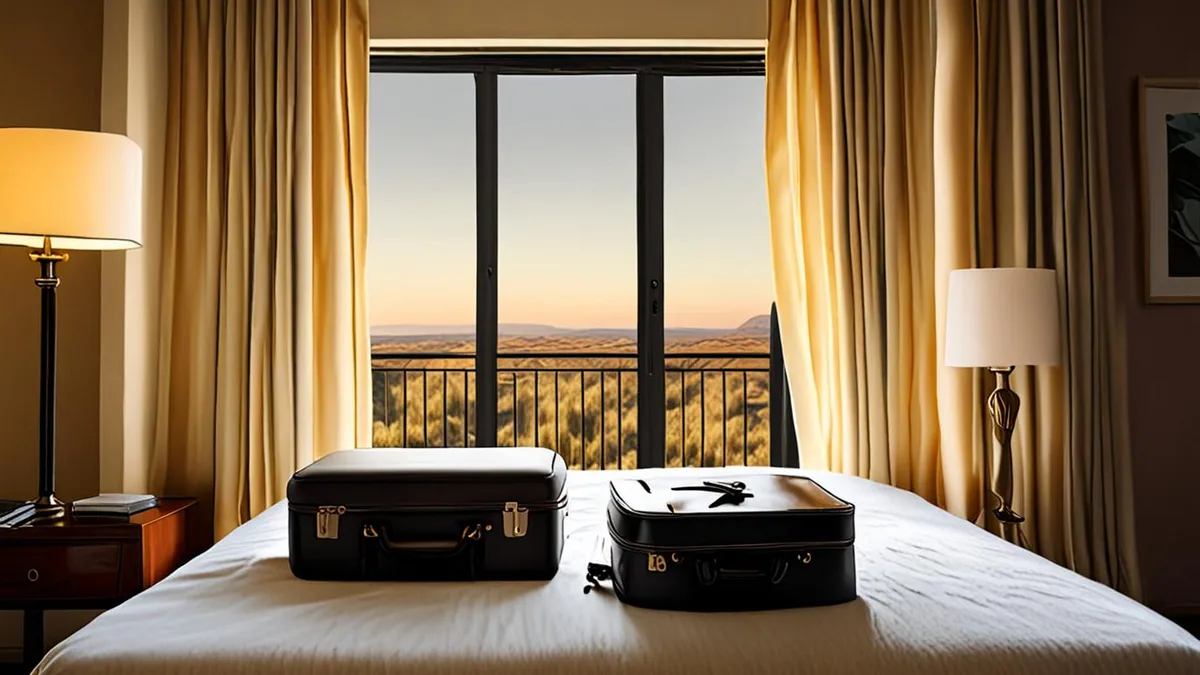
Use Loyalty Status and Direct Bookings to Your Advantage
If you travel often, your loyalty status is the single biggest lever you have. Top-tier members of major hotel loyalty programs often receive late check-out until 2:00–4:00 pm as a standing benefit, which turns a favour you have to negotiate into something you are simply entitled to ask for. The catch is that the system only knows who you are if your membership number is attached to the reservation, so add it to every booking, every time, even for a single night.
Why booking direct matters
Booking directly with the hotel, rather than through an online travel agency, gives the front desk room to favor you, since the reservation is fully under their control. When a booking comes through a third party, changes and goodwill gestures involve extra layers the agent may not want to deal with. Direct guests are also the guests the hotel is trying to win back, which quietly works in your favor when rooms are tight.
Property choice matters more than most travelers realize. Higher-category hotels tend to have more staff and more room categories, which makes swapping you into a free room easier when your requested hours clash with an incoming arrival. If flexibility matters for your trip, pick your hotel with that in mind from the start rather than hoping a small property can bend its schedule for you.
What a Late Check-Out or Early Check-In May Cost
Before you agree to anything, it helps to know what an extended stay on either end of your reservation actually costs. Short extensions are often free, but anything substantial usually comes with a charge, and the amounts vary widely from one property to the next. Treat the fee as a negotiating topic, not a fixed rule, and never assume it will simply appear on your final bill at a fair price.
As a rough guide, expect typical late check-out fees of roughly $30 to $100, or half of one night’s rate when you keep the room past mid-afternoon. Early check-in is usually free when a clean room happens to be ready, but a guaranteed early arrival may be priced like a partial night. The key is to know where you stand before you say yes.
How long you want to stay also matters. A 1–2 hour extension is approved far more often than a request for 4 or more hours, because a short delay rarely disrupts the housekeeping schedule while a long one usually means the room cannot be turned over for the next guest.
- Ask for the fee to be confirmed in writing or in the app before you agree, so the amount at check-out matches what was quoted and you have proof if a different shift is on duty.
- If you hold top-tier status in a major loyalty program, mention it before any fee is discussed, since 2:00–4:00 pm late check-out is often a standing benefit that costs you nothing.
- Ask whether the charge is per room or per hour, because some properties quote an hourly rate that adds up quickly if your flight keeps slipping.
- If a fee is quoted at check-in for a future date, ask whether it can be waived on the day if occupancy turns out low, which many front desks will quietly honor.
Smart Alternatives When the Hotel Says No
Even a polite, well-timed request gets refused sometimes, usually because the hotel is simply full. That does not mean your last morning or first afternoon has to be wasted. A few practical backups can keep the day comfortable while you wait for your room or your flight.
Start with the simplest option: nearly every hotel offers complimentary luggage storage, so you can hand over your bags and explore hands-free for your final hours. If you would like somewhere to freshen up, ask about late access to the gym or spa showers, or a day-use room rate, which some properties sell at a fraction of a full night. When choosing where to stay in the first place, it also pays to understand what each category of property typically offers, and a clear guide to how hotel star ratings work can help you match the services you need to the hotel you book.
For departure day itself, think beyond the hotel. An airport lounge or a luggage-storage service near the station can give you a quiet place to work, shower or repack your bags. And if you land before noon on arrival day, plan a light first afternoon nearby and collect your room key later, instead of betting the whole day on an early check-in that may never come through.
- Ask the front desk where the nearest left-luggage counter is if the hotel cannot store oversized items such as skis, surfboards or bicycle cases.
- Some airport lounges sell single-entry access to travelers regardless of airline or cabin class, which can be cheaper than a late check-out fee and includes showers and food.
- If the hotel has a pool, ask whether day guests may use it after check-out; many resorts allow it and it turns a waiting afternoon into a proper final swim.
- On arrival days, a café or hotel lobby with free Wi-Fi near the property makes a convenient staging point until your room is ready.
Boost Your Odds With Timing and Polite Phrasing
Pick Dates That Work in Your Favor
Timing is the quietest lever you have. Midweek stays from Tuesday to Thursday typically run 10–20% lower occupancy than weekends, which means more free rooms and a front desk that can say yes without consequences. The same logic applies across the year: hotels sit nearer 50–65% occupancy in shoulder season than the 70–85% common in high season, so a request in May or October is far easier to grant than one in the middle of August.
Make the Request Easy to Approve
Keep the request small and specific. One or two extra hours is a much easier yes than an open-ended “as late as possible,” and a concrete reason such as an evening flight helps staff justify the favor internally. Being a low-friction guest matters more than most travelers realize: mention that you will settle the bill the night before and skip housekeeping that morning, and the front desk has fewer reasons to hesitate.
If the first answer is no, do not treat it as final. Ask whether a later slot might open up and offer to check back, since availability changes through the day as departures are confirmed and rooms are released. A gracious guest who accepts a no politely is often the first one called when a room suddenly frees up.
Getting Late Check-Out and Early Check-In Right
So your flight leaves at 8 pm and check-out is at 11 am — will asking for extra hours work, and will it cost a fortune? The answer comes down to knowing the standard 3–4 pm check-in and 11 am–noon check-out windows, and asking at three moments: when booking, 24–48 hours before arrival, and again at the front desk. A specific, small request beats a vague one every time.
Loyalty status, direct bookings, midweek dates and polite phrasing all shift the odds in your favour, while paying for the privilege — usually somewhere between a modest add-on and half a night’s rate — is the realistic fallback if you want the room all afternoon. And if the hotel says no, luggage storage, spa access and day-use options mean a no never has to ruin your final or first travel day. Have you scored a late check-out recently? Share your story in the comments or pass this article along to a fellow traveler.