You have found the right destination, shortlisted a few properties, and then hit the question that stalls every booking: beachfront vs pool-focused resorts. Do you pay extra to wake up steps from the sand, or settle into a resort built around its pools? Pick wrong and you can spend hundreds more than you needed to, or spend a week wishing you had chosen differently.
This guide breaks the decision down clearly. We start by defining what each resort type actually offers, then compare where your budget goes further, how season and weather change the equation, and which traveler suits which setup. You will also find practical checks to run before booking and advice on matching the resort style to your destination. By the end, you should know exactly which holiday fits your dates, budget and daily rhythm.
What Beachfront vs Pool-Focused Resorts Really Means
The two labels describe genuinely different holidays. A beachfront resort puts you directly on the sand: you step out of your room and onto the beach, usually with sea views, the sound of waves and constant sea breezes. Expect the downsides that come with it too, such as salt air on your balcony furniture, humidity in your room and sand tracked indoors.
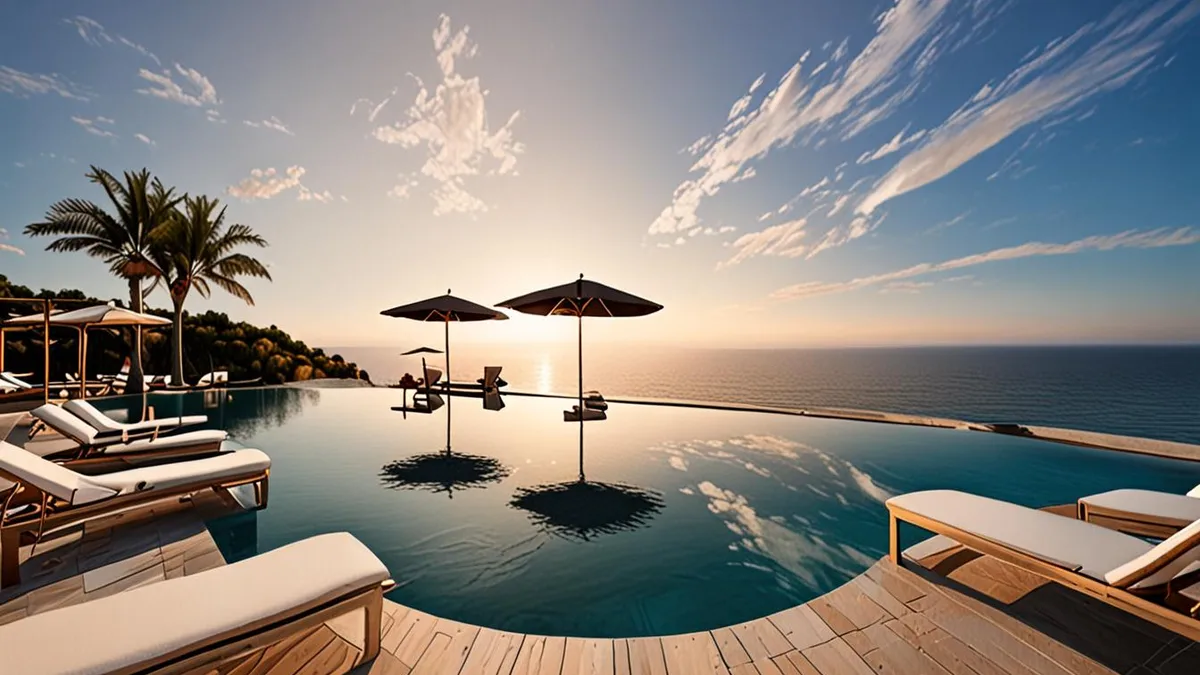
A pool-focused resort is built around its water in a different way. Think landscaped lagoon pools, wide sun decks, swim-up bars and shaded loungers, often set back from the shore or on grounds where the sea is not the main event. The pool becomes the social and practical center of your stay.
Many resorts offer both
Here is the complication: plenty of large resorts have a beach and several pools, so the real question is not which feature exists but which one your room rate and daily routine prioritize. A cheaper room facing the gardens may leave you walking five minutes to either.
Read the room categories carefully
Terminology varies widely between properties and booking sites. “Oceanfront” often means direct sand access, but “oceanview” can mean a distant sliver of water between two buildings, and “beach access” sometimes means a short walk down a path or across a road. Before you pay for an upgrade, ask the resort or check the property map to confirm whether your category delivers direct sand or merely a glimpse and a stroll.
Cost Comparison: Where Your Budget Goes Further
The price gap between the two styles is real. At the same property, beachfront rooms typically cost 20-40% more than equivalent pool-view rooms. That premium buys you direct sand access and usually the best views on the property, but it adds up quickly over a week-long stay.
The hidden costs of the beach
Beachfront stays also tend to pull extra spending out of your wallet. Watersports such as snorkelling trips, kayaking rentals and sailing excursions often add 15-25% to your daily spending, because the sea is right there tempting you. Pool use, by contrast, is essentially free once you have checked in.
What pool-focused rates include
Pools-focused resorts frequently bundle perks into the room rate that beachfront properties charge separately for, such as cabanas, sun loungers and towel service. When comparing prices, look at what is actually included rather than the headline nightly figure. Understanding how hotels classify and price their room categories helps here, and a clear guide to what hotel star ratings really mean can help you judge whether a property’s rate matches its standard.
If direct beach access is priced out of reach, a pool-view upgrade can be a smart middle path. You get a better room and a pleasant outlook, keep the beach a short walk away, and save the difference for dinners or excursions.
Season and Weather: When Each Option Shines
Timing changes the answer more than most travelers expect. Many tropical beach destinations have a monsoon or rainy season between May and October, which can turn a beachfront room into an expensive view of gray skies and rough water. During those months, a heated pool may be the only water you actually want to get into.
Pool-focused resorts have a natural advantage here: most heat their pools to 26-28°C, which keeps swimming comfortable year-round, including in shoulder season when the air is cooler or the weather is mixed. A beach, by contrast, offers no such flexibility.
Peak beach season brings its own trade-offs: higher prices and crowded sand, with lounger competition at popular stretches. Shoulder months often favour pool-centred stays, when rates ease off and the pool deck is quieter.
Before booking a beachfront room for a rainy-month trip, check the destination’s actual rainfall pattern rather than relying on generic “best time to visit” advice.
- Sea conditions vary within a season: even outside peak rainy months, some coasts have strong currents or stinger seasons that make swimming unadvisable, so ask the resort about water safety for your specific dates.
- Pool capacity matters in busy months: at large resorts, a full house can mean crowded pools and a scramble for loungers, so check how many pools and how many rooms a property has.
- Heated versus unheated pools: not every resort heats its pools, so confirm water temperature if you plan to swim in cooler months or at higher altitudes.
- Rainfall is local, not regional: two resorts an hour apart can sit on opposite sides of a mountain range with very different weather, so check forecasts and historical rainfall for your exact area.
Which Traveler Suits Which Resort
The right resort type depends a lot on who is traveling with you and how long you are staying. Water habits, trip length and even your social style all push the answer in one direction or the other.
Families and short-stay travelers
Families with children under 8 tend to prefer pool-focused resorts, and it is easy to see why. Shallow entries, gradual steps and a clearly defined swimming area make supervision far simpler than an open sea with waves and currents. Parents can relax a little more when the water has an edge.
Pool-focused resorts also shine on 3-5 night trips, especially when the holiday mixes a city stop with a resort finale. With only a few days to fill, you may not have time to truly use the beach, while a pool delivers instant, reliable downtime. If you are the kind of traveler who chats with neighbors over a swim-up bar, poolside social life is part of the appeal.
Beach lovers and honeymooners
Snorkellers, surfers and anyone who plans their day around a sunset walk gets the most from 7 nights or more at the beach. Sea conditions vary from day to day, so a longer stay gives you the good mornings and calm afternoons that make the premium worthwhile.
Honeymooners chasing privacy may actually prefer an adults-only pool terrace. Public beaches come with vendors, walkers and noise, while a quiet terrace with cabanas can feel far more intimate. Match the setting to the mood you want, not the one the photos suggest.
Practical Checks Before You Book
A little homework before you pay the deposit can save you from arriving at a room that is “oceanfront” in name only. Photos are taken on the best day of the year from the best angle, and category names are chosen by marketing teams, not surveyors. The good news is that four simple checks cover most of the surprises, from misleading maps to disappointing water conditions, and none of them takes more than a few minutes.
- Verify the map. Open the resort map on the official website and find your specific room block. Confirm its actual walking distance to the sand or to the main pool, because some properties stretch across grounds where a “beachfront” category still means several minutes of walking, especially in the heat.
- Book early for peak season. Beachfront categories sell out first, so reserve 3-6 months ahead for peak season to secure the best rates. Waiting usually means the best rooms are gone and you are left choosing between a pricey upgrade or a room you did not want.
- Check the water itself. Ask whether pools are heated if you are traveling in a cooler month, and whether the beach is swimmable or tidal on your dates. Some coastlines disappear entirely at low tide or become too rough for safe swimming in certain conditions.
- Read reviews for your travel month. Recent guest reviews mention things brochures never will, such as seaweed piling up on the sand, jellyfish in the water or pools crowded beyond comfort. Learning how to read hotel reviews and spot red flags before booking helps you filter the useful complaints from the noise.
It also pays to put your questions in writing. Email the resort directly and ask for confirmation of anything the booking page leaves vague, such as whether your room category includes loungers at the beach or pool, or how far the nearest shaded seating is. Written answers give you something to refer back to if the reality on arrival does not match what you were told, and most resorts respond within a day or two.
Spending an hour on these checks is the cheapest insurance you can buy for a resort holiday. When the water situation, room location and season all line up with what you booked, the beach-versus-pool question mostly answers itself once you arrive, and you can get straight to the part of the trip that actually matters.
Matching the Resort to Your Destination
The best resort focus often depends less on the property and more on the stretch of coast it sits on. Some destinations are built for beach days, while others quietly steer you toward the pool no matter what the brochure shows.
Where beachfront earns its price
On genuinely swimming coasts, beachfront makes complete sense. Places like the Maldives or the Algarve exist because the sea is calm, clear and inviting, and staying anywhere but the sand means missing the whole point of the trip. If you can walk from breakfast straight into warm water, the premium pays for itself daily.
When the pool becomes essential
Cliffside and cooler-climate destinations often make pools the more usable water feature. On a dramatic cliffside retreat like Santorini, an infinity pool looking over the caldera delivers the water experience the sea never will — you are there for views, not for swimming in the Aegean below. Similarly, resorts on rocky or tidal shores deliver gorgeous panoramas but not beach days, so a good pool becomes essential rather than a nice extra.
The lesson is simple: let the destination’s coastline quality decide, not the brochure photos. Look at an honest map and recent traveler photos of the actual beach before assuming the sea is swimmable. A beautiful property on the wrong kind of shore turns a beach-focused booking into an expensive view, while a pool-focused one turns the same shore into a perfect backdrop.
Choosing With Confidence
The decision comes down to three things: your dates, your budget, and how you actually want to spend each day. If you are traveling in swimming season with a week or more to fill, beachfront typically justifies its 20-40% premium because the sea becomes your daily routine. If your trip is a short 3-5 night escape, falls in the rainy months, or involves young children, a pool-focused resort delivers year-round swimming and better value for the same money.
Get this match right and you avoid the most common regret: paying a premium for sand you never reach, or missing the water entirely. Whichever way you lean, the goal is the same — a holiday where the water you actually use matches the one you paid for. If this helped you decide, share it with a travel partner or leave a comment with your pick.