Many travelers want to shrink their footprint on vacation, but the words “eco lodge” often bring up the same worries: Will the bed be lumpy? Is the shower going to be ice cold? And will the final bill hide charges nobody mentioned at booking? Those fears keep a lot of people in conventional hotels that are far less sustainable.
The good news is that a well-run eco lodge is usually far more comfortable than its reputation suggests. Quality bedding, solar-heated hot water and locally sourced meals are common, and pricing is often more predictable than at a big resort. This guide walks you through what an eco lodge actually is and how it differs from a regular hotel, the comforts you can realistically expect, what stays cost in 2025, the green practices that separate genuine operations from greenwashed marketing, how and when to book, who these stays suit best, and some final thoughts to help you choose well.
What Is an Eco Lodge and How Is It Different?
An eco lodge is built around one core idea: minimal environmental impact. That shapes everything from construction to daily operations. Buildings are typically made with local timber, stone or bamboo rather than imported materials, which reduces transport emissions and helps the property blend into its surroundings instead of dominating them. You will often notice this before you even check in: walkways of local stone, roofs of thatch or wood, and structures designed to catch breezes rather than fight the climate with machinery.
Small by design
The second defining feature is size. Most eco lodges cap guest numbers at 10 to 20 people, so you should expect a small, quiet property rather than a resort with pools, bars and hundreds of rooms. This limit is deliberate: fewer guests mean less strain on water, energy and the surrounding ecosystem, and it usually translates into a calmer, more personal atmosphere.
Spotting genuine sustainability
Because “eco” is a marketing magnet, some properties use the label without backing it up. Certifications such as Green Key or LEED help identify genuinely sustainable operations versus greenwashed marketing. Look for these credentials on a lodge’s website, and read recent guest reviews for comments on energy use, waste handling and staff practices. A lodge that explains its systems openly, from solar arrays to composting, is usually a far safer bet than one that simply sprinkles the word “eco-friendly” across its homepage.
Comforts You Can Expect at an Eco Lodge
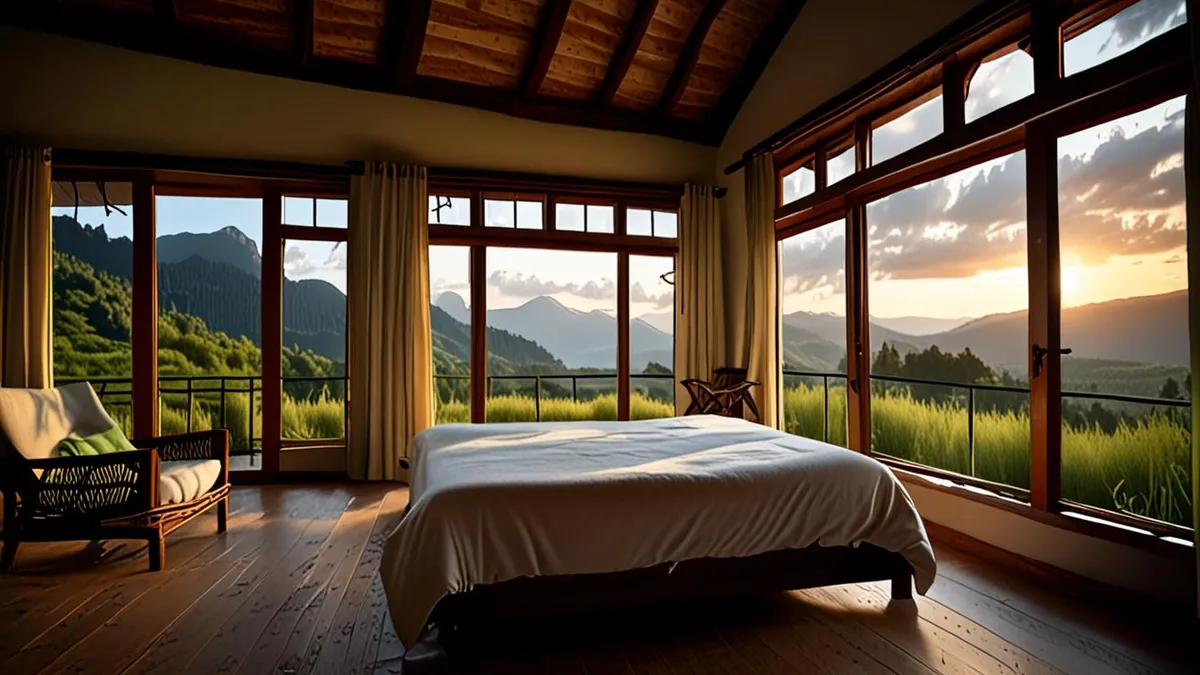
The biggest surprise for first-time guests is how comfortable a well-designed eco lodge room actually is. Expect simple but thoughtful setups: quality linen beds, mosquito screens on windows and openings, and natural ventilation instead of constant air conditioning. Ceiling fans and clever building design usually keep rooms pleasant, and many guests find they sleep better without the hum of an AC unit. If you are curious about one of the most popular versions of this style of lodging, our guide on what a treehouse lodge stay costs in 2025 covers the details.
Power and hot water
Electricity often runs on solar power, so charging points may be limited to common areas rather than every room. Bring a fully charged power bank and top up devices during the day in the lounge or dining area. Hot water is usually solar-heated too, which means the sun does the work: late morning and afternoon are typically the most reliable windows for a genuinely hot shower. Early risers may find the water merely warm, so plan your shower around the sun rather than the clock.
Staying connected
Wi-Fi is common at eco lodges, but expect it to be slower than at a city hotel, and sometimes restricted to lounge areas rather than available in every room. Treat this as part of the experience rather than a flaw: most guests find that a few days of lighter connectivity is one of the highlights of the stay. If you need to work remotely, ask the lodge about connection quality before booking and consider scheduling calls during quieter hours when bandwidth is less contested.
What an Eco Lodge Stay Costs in 2025
Eco lodge pricing covers a wide range, and knowing the tiers helps you budget honestly. Budget eco cabins start around $80 per night in low season, which makes this one of the more accessible ways to stay somewhere genuinely sustainable without giving up a night in nature. Mid-range double rooms typically cost $120 to $450 per night, and at this level meals are often included in the rate, which matters more than you might expect. At the top end, remote luxury eco lodges can exceed $600 per night, with full-board dining and guided activities bundled into the price.
One of the pleasant financial quirks of eco lodges is predictability. Because most operate with set menus rather than à la carte dining, and because excursions are frequently part of the package, you face fewer surprise costs than at conventional resorts, where drinks, activities and meals can quietly inflate the bill. Ask the lodge directly what is included before you book, since packages vary widely between properties.
It also helps to think in terms of total stay cost rather than the headline nightly rate. A slightly higher rate with meals and transfers included often works out cheaper than a bargain room where everything is billed separately, especially over a stay of several nights.
- Meal plans change the math: a $450 nightly rate with three meals included can cost less overall than a $300 room at a resort where dinner alone runs high, so always compare total stay cost rather than the headline rate.
- Season shifts prices significantly: the same cabin that starts around $80 in low season can cost several times more in peak months, so shifting your dates by a few weeks is often the single biggest saving available.
- Bundled activities add value: at luxury lodges, guided hikes, wildlife excursions and boat trips are typically rolled into the rate, which would cost extra if booked separately at a conventional hotel.
- Remote locations justify the premium: lodges accessible only by small plane or long boat transfer carry higher operating costs, and that is reflected in nightly rates at the upper end of the scale.
Green Practices to Look For
The heart of any genuine eco lodge is its commitment to reducing environmental impact, and you can judge that commitment by looking at four practical areas: energy, water, waste and food sourcing. Before you book, it helps to know what a well-run property actually does in each of these areas, so you can separate real sustainability from clever marketing language.
Renewable energy is where most lodges start. Solar panels for electricity and water heating are the baseline standard, and many properties run almost entirely on the sun. This has practical consequences for your stay: lights may be dimmer than at a hotel, and power availability depends on daylight and battery storage. Water conservation is equally central. Because many lodges sit in fragile ecosystems or remote areas without municipal supply, they treat every liter as a resource to be used carefully, then reused where possible.
Waste management and local sourcing round out the picture. A serious operation will have a visible system for handling what you throw away and a kitchen that reflects its surroundings rather than a generic resort menu. Here is what to look for when you evaluate a property:
- Renewable energy: ask whether backup generators run on diesel or biofuel, and how often they are needed on cloudy days.
- Water conservation: look for rainwater harvesting tanks and greywater recycling systems that route shower and sink water to gardens.
- Waste management: check for composting of food scraps, plastic-free amenities and refillable toiletry dispensers instead of single-use mini bottles.
- Local sourcing: on-site vegetable gardens or partnerships with nearby farms, with set menus that change to reflect seasonal availability.
If a lodge can answer specific questions in these four areas, that is a far better sign of genuine commitment than any leafy logo on a website. Don’t hesitate to email and ask directly before booking.
How and When to Book an Eco Lodge
Because eco lodges are small by design, booking them works differently from reserving a large hotel with hundreds of rooms. Many properties host only a handful of cabins, so availability is genuinely limited and the best rooms go first. A few extra steps of planning will save you disappointment and help you compare prices fairly between properties.
- Book early for peak periods. Plan 3 to 6 months ahead for high-season dates, since properties that host only 10 to 20 guests sell out their handful of rooms quickly, sometimes before larger hotels have even filled a fraction of theirs.
- Compare what is included, not just the rate. Before weighing one nightly price against another, check whether meals, airport or town transfers and guided activities are bundled in, because a higher rate with full board and excursions can cost less overall than a cheaper room where everything is added on.
- Ask about seasonal access. Some lodges in rainforest or Arctic regions close entirely or reduce services during wet or winter months, so confirm the property is open, reachable and running its full program during your travel dates.
It is also worth reading recent guest reviews for clues about the practical realities of the season you plan to visit, such as trail conditions, wildlife activity or how reliable solar power and hot water actually were. Reviews often reveal details the lodge’s own website leaves out, like the true travel time from the nearest airport. If you are considering a cold-weather destination, our guide to staying at a wilderness lodge in Lapland gives a good sense of what a remote winter stay involves. Finally, keep a copy of your confirmation and the lodge’s contact details offline, since some properties have limited phone or email coverage, and messaging may only be answered once a day.
Who an Eco Lodge Stay Suits Best
An eco lodge stay rewards a particular kind of traveler. If your ideal vacation involves waking to birdsong rather than an alarm clock, joining a guided hike at dawn and ending the day with a quiet dinner sourced from the lodge’s own garden, you will likely feel right at home. These properties trade nightlife, room service and entertainment programs for wildlife, silence and small-group experiences led by guides who often grew up in the area.
Comfort expectations and trade-offs
The right fit also comes down to how you feel about simpler amenities. Rooms are usually comfortable but pared back: expect airflow from windows and ceiling fans rather than climate control in every room, limited charging points and set menus rather than à la carte dining. Guests who accept these trade-offs tend to find the low-impact, small-group setting far more memorable than a conventional resort. If you measure a hotel by its spa menu or a long cocktail list, an eco lodge may leave you wanting more.
Families and couples
Couples often find eco lodges especially appealing, since the small number of guests creates an intimate, unhurried atmosphere that larger hotels struggle to replicate. Families seeking immersive experiences, from guided nature walks to learning about local food production, can also have wonderful stays. One caution: very remote lodges, particularly those reached by small plane or long boat transfers, may not suit toddlers or very young children, both because of the journey and the limited medical facilities nearby. Check the lodge’s minimum-age policy before booking, as some properties set one for safety reasons.
In short, if you value nature, quiet and authenticity over polish and convenience, an eco lodge is very likely your kind of place.
Final Thoughts on Your Eco Lodge Stay
An eco lodge stay doesn’t mean cold showers, lumpy beds or a bill full of surprises. The reality is far more comfortable: solar-heated water, quality bedding, and meals built around locally sourced ingredients. Most properties keep things small, often hosting just 10 to 20 guests, which means quieter surroundings and more personal service than you’d find at a conventional hotel.
Costs are easier to predict than many travelers expect, with nightly rates typically running from $120 to $450 for a double room, and fewer hidden extras thanks to set menus and bundled activities. If your priority is lowering your footprint without giving up genuine comfort, an eco lodge is well worth considering. Have you stayed at one recently, or are you planning your first trip? Share your experience or questions in the comments, and feel free to pass this article along to a fellow traveler.