Figuring out where to stay in Crete is harder than it looks. The island stretches roughly 260 km from west to east, and a seafront villa near a sandy beach and a stone house in a mountain village can feel like two different holidays. Many travelers shortlist a beautiful property first, only to realize it sits two hours from the sights or beaches they actually came for.
This guide breaks the decision down into manageable pieces. We’ll start with how your trip style should shape the choice between coastal villas and village stays, then compare what each option offers in terms of pace, access and price. From there, we’ll look at how the west, center and east of the island differ, when to book for the best rates, and a few practical checks to make before you commit. By the end, you should know exactly which kind of base suits your Crete trip.
Why Where to Stay in Crete Depends on Your Trip Style
Crete is not a compact island you can cross in half an hour. It runs roughly 260 km east to west, which means the region you pick matters more than on almost any other Greek island. A gorgeous villa in the far west won’t help you much if you planned your week around the Minoan palaces in the center. That’s why the right order of decisions is region first, then stay type, not the other way around.
Think about how you’ll actually spend your days before you fall in love with a listing. Beach-focused travelers want to be within a short drive of sand and water, ideally without a long commute each morning. Hikers are better off basing themselves inland or in the west, closer to gorges and mountain trails. Culture seekers who care about archaeological sites, museums and old towns will want a base that puts Heraklion, Rethymno or Chania within easy reach.
Comfort is not the real difference
Here’s the good news: you don’t have to choose between comfort and character. A well-restored village house can be just as comfortable as a coastal villa, with good beds, a proper kitchen and often a pool. The real differences are pace, access and price. Villas put you steps from the sea and minimize driving; village stays slow things down, trade convenience for atmosphere, and usually cost less. Decide which of those matters most to you, and the choice becomes much clearer.
Coastal Villas: Sea Access, Space and Higher Rates
The classic Crete villa sits right on or very near the water, with steps down to a swimming platform or a path to a small cove. Direct sea access is the defining feature, and it changes your whole rhythm: you can swim before breakfast, dry off on your own terrace and never worry about parking at a busy beach. Most coastal villas also come with a private pool, generous outdoor space and shaded dining areas built for long evenings.
Convenience extends beyond the property line. The best-located coastal villas keep you within a short drive of tavernas, small minimarkets and the beaches you’ll actually want to swim at. That said, don’t assume walkability; some seafront properties sit on quiet stretches of coast where you still need the car for dinner. Always check what’s genuinely within walking distance.
What the premium looks like
Sea access comes at a price. For comparable size and standard, expect to pay roughly 30-50% more than a similar village house in the same region. That premium buys you location, not necessarily more space or better furnishings.
So who gets the most value from it? Families and groups who plan to spend most of their time at the villa or on nearby beaches. If your ideal day is morning swims, lunch at home, an afternoon by the pool and a short drive to dinner, the villa experience justifies the cost. If you’d rather be out exploring every day, you’ll be paying for a location you barely use.
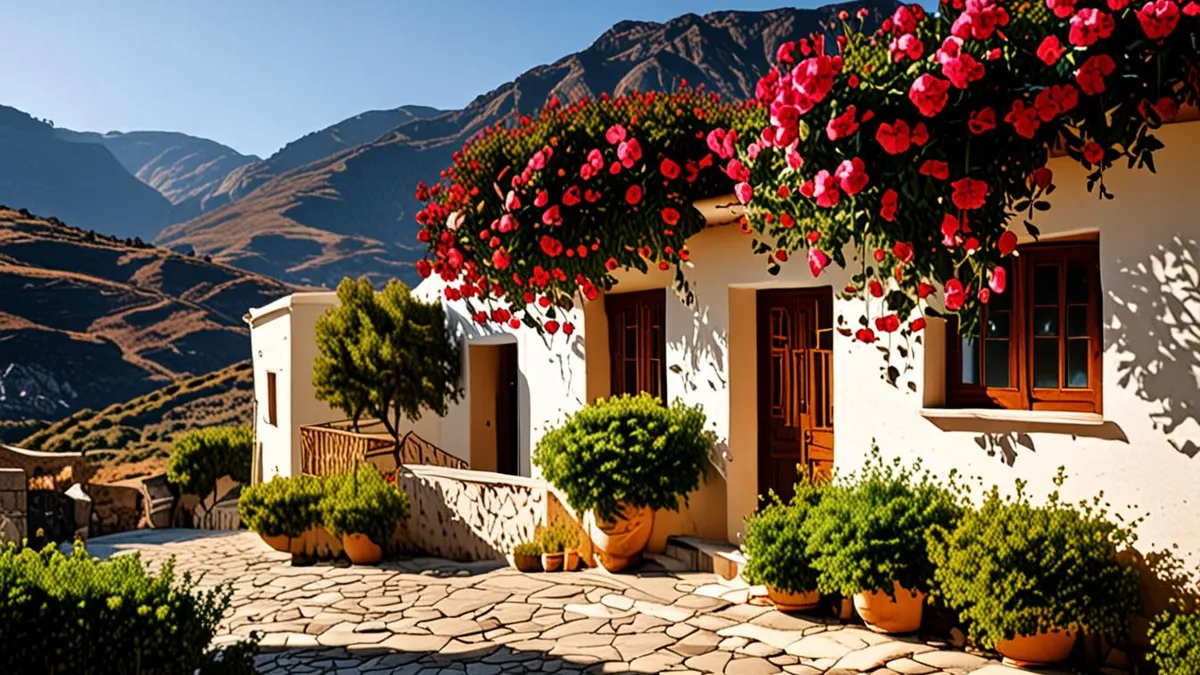
Village Stays: Authenticity, Value and Mountain Air
Inland Crete is where many travelers find the version of the island they were hoping for. Village stays are typically restored stone houses set among working communities, where old men still gather in the kafeneia, neighbors bring you produce, and hiking trails start at the edge of town. You’re not in a resort bubble; you’re part of a place that functions the same in November as it does in July.
The trade-off is distance from the coast. Most inland villages sit roughly 20-40 minutes by car from the nearest swimmable beach, so expect a daily drive if beach time matters to you. In return, you get noticeably cooler evenings in summer, quieter nights, and often a pool with mountain views instead of sea views.
Who village stays suit best
Village houses shine on longer stays, where a week or more lets the daily rhythm sink in and the lower nightly rate compounds into real savings. They’re also ideal for food-focused trips: you’ll shop at village bakeries and small markets, cook with local ingredients, and eat at family-run tavernas where the menu depends on what came in that morning.
On price, the advantage is consistent. A comparable village house typically costs noticeably less than a coastal villa in the same region, often enough to fund a few extra nights or a better rental car. If your priority is atmosphere, value and mountain air rather than stepping straight from your terrace into the sea, an inland base is the stronger choice.
Choosing Your Crete Region: West, Centre or East
Crete is roughly 260 km long east to west, so picking your region matters more than on most Greek islands. A villa near Chania and one near Sitia are two very different holidays, even if the photos look similar. Decide what your days will look like before you start comparing properties.
The west around Chania is the natural choice for first-timers. You get some of the island’s best-known beaches, the dramatic Samaria Gorge within day-trip range, and Chania’s old town with its Venetian harbor for evenings out. The trade-off is popularity: this region draws the biggest crowds in summer.
The center, near Heraklion and Rethymno, is the all-rounder. You can pair beach mornings with visits to Minoan sites like Knossos, and the widest villa choice on the island means more competition and options at different price points. Rethymno’s old town makes a pleasant base town too.
The far east around Elounda and Sitia is the quiet corner. Expect fewer tour buses, smaller resorts and a slower rhythm, at the cost of longer transfers. If the logic of choosing between beachside and inland bases sounds familiar, it’s the same decision travelers face when comparing beaches versus hillside villas in Phuket.
- West: Chania airport serves the region directly, so transfers are short if your villa is on the Akrotiri peninsula or the north coast.
- Centre: Both Chania and Heraklion airports can work as gateways, which gives you flexibility when comparing flight prices.
- East: Sitia airport covers the far east with limited connections, so many travelers fly into Heraklion and accept a longer drive east.
- Elounda: This corner is known for upscale resorts and views over the bay toward Spinalonga, rather than long stretches of sand.
When to Book: Seasons and Lead Times for Crete Villas
Timing shapes both your rates and your experience in Crete. Peak season runs late June to early September, when villa rates hit their highest and the popular beaches and old towns are at their busiest. If you want a July or August coastal villa with a private pool, book 6-9 months ahead, especially for larger properties that host groups.
The shoulder months of May, early June, late September and October are when Crete rewards flexible travelers. Rates typically drop 20-40% compared with peak, the weather is milder for hiking and sightseeing, and sea temperatures are still comfortable for swimming in autumn. Late September is a sweet spot many regulars aim for: warm water without the peak crowds.
Booking lead times by stay type
Coastal villas with pools and sea views sell out first, so the 6-9 month rule applies whenever your dates fall in peak season. Shoulder-season village stays are a different story: they can often be booked just 2-3 months out, which gives you the freedom to watch weather forecasts and pick your region late. That flexibility is a real advantage if you’d rather chase a warm week than lock in a date in winter.
For a broader comparison of how booking windows work across the region, this guide to the best time to book Mediterranean villas puts Crete in context with other destinations.
Practical Checks Before You Commit
The details that make or break a Crete villa stay are rarely visible in the listing photos. Before you pay a deposit, take an hour to confirm the practical points below. They matter more for village stays than coastal villas, but neither type is immune to surprises.
A rental car is near-essential for village stays. Inland houses are usually a drive from the nearest swimmable beach, and taxis or buses are rarely a realistic daily option from small villages. Coastal villa guests can often manage without a car if the property is within walking distance of tavernas and a mini-market, so ask the owner directly about what’s reachable on foot. If you do rent, book a car size you’re comfortable parking on narrow island roads.
Climate control is the second big check. Crete’s summers are genuinely hot, and pools that feel inviting in August can be chilly in the shoulder months. Neither issue is usually mentioned in the headline description, so put it in writing before booking.
- Pool heating: Ask whether it’s available, whether it costs extra, and how warm it actually gets in May or October, when unheated pools can sit well below swimming temperature.
- Air conditioning: Confirm it’s in the bedrooms, not just the living area, and whether usage is included or metered separately in peak summer.
- Driving times: Check actual route times to beaches, shops and tavernas at the hour you’d realistically drive, since winding mountain roads turn a short map distance into a slow trip.
- Access road: Some village houses sit on narrow lanes or steep tracks, worth knowing before you arrive with a large rental car and luggage.
- Groceries: Identify the nearest well-stocked supermarket, as village shops may carry basics only and close for a long afternoon break.
Coastal Villa or Village Stay: The Short Answer
Picking between a coastal villa and a village house in Crete comes down to the kind of days you want, since the island is long enough that no single base covers everything. The honest short answer: coastal villas win for beach time and convenience, while village stays win for value and atmosphere. Neither is more comfortable than the other, so the choice comes down to pace and priorities rather than quality.
Remember that your region and the season shape the experience as much as the stay type itself. A villa booked for late July feels like a different holiday than the same house in October. Before you commit, match your base to how many hours you’ll actually spend at the property. If it’s a lot, pay for the sea view and the pool. If it’s a little, let a village house stretch your budget further. Have you stayed in Crete? Share your pick in the comments or pass this article along to a travel companion.