You know you want a Tuscan countryside trip, but you cannot tell whether a villa or a hotel will actually fit your group, budget and travel style. The villa vs hotel in tuscany question trips up plenty of travelers, because both options deliver rolling hills, wine country views and cypress-lined roads — just in completely different ways. One gives you a private base with space to spread out; the other gives you service, flexibility and someone else handling the details.
This guide breaks the decision down piece by piece. We compare the core difference between the two stay types, what each typically costs, and how location and logistics — like needing a rental car — play out in the countryside. We also cover booking lead times, what a private pool villa actually gives you in practice, and when a hotel is simply the smarter choice. By the end, you should know exactly which one suits your trip.
Villa vs Hotel in Tuscany: The Core Difference
At the most basic level, the two options work in completely different ways. A Tuscan villa is rented as a whole property: you get the entire house, the private pool, the gardens and usually the kitchen and outdoor dining space all to yourself. Bookings typically run on a weekly cycle, and once you’ve paid, the place is yours — no other guests in the living room, no shared pool, no one else’s towels by the loungers.
A countryside hotel, on the other hand, sells you a single room, priced per night. What you’re really buying is the bundle of services that comes with it: daily housekeeping, breakfast in the morning, a front desk to answer questions, and often an on-site restaurant for dinner. You share the pool, the grounds and the common areas with other guests, but you also hand off all the work of running the place to someone else.
Independence versus service
That’s the real decision hiding under the villa-vs-hotel question. A villa gives you self-catering independence: you shop for groceries, cook your own meals, plan your own days and live at your own rhythm. It suits travelers who want to feel like temporary locals rather than guests.
A hotel gives you service and flexibility. Someone else makes the beds, someone else handles dinner, and you can change your plans day to day without any commitment beyond your booking. Neither option is better in the abstract — the right answer depends entirely on how much autonomy you want and how much convenience you’re willing to pay for.
Cost Comparison: Which Stay Type Fits Your Budget
Price is where the villa-versus-hotel math gets interesting. Weekly villa rentals in the Tuscan countryside typically run €2,000-€8,000 depending on size and pool, which sounds steep until you split it. For a group of six or more, that per-person cost can undercut booking three or four hotel rooms for the same week, especially in peak season.
Mid-range countryside hotels typically cost €120-€250 per room per night. For a couple or a solo traveler, that rate is hard to beat: you pay only for the room you actually sleep in, and breakfast is usually bundled in. Two people spending a week at €180 a night will spend less than they would on most villa weeks, with none of the grocery or cleaning costs.
The structure of the costs also differs. A villa is front-loaded and fixed: you agree on one price for the week, whether you cook every meal or eat out nightly. Hotel costs scale with nights and rooms, so they climb quickly for long stays or big groups, but they let you book just two or three nights without waste.
Before comparing headline prices, factor in these extras:
- Heating and pool fees: some villas charge separately for pool heating or off-season heating, which can add a meaningful amount to the weekly total, so ask before booking.
- Final cleaning and deposits: villa rentals often include a cleaning fee and a refundable damage deposit held on arrival, costs a hotel simply doesn’t have.
- Tourist taxes: both stay types usually charge a local lodging tax per person per night, and the rate varies by town, so check the current amount with your host or hotel.
- Food budgeting: a villa shifts spending toward grocery runs and self-catering, while a hotel pushes it toward restaurants, which changes the real total cost of a week.
Location and Logistics in the Tuscan Countryside
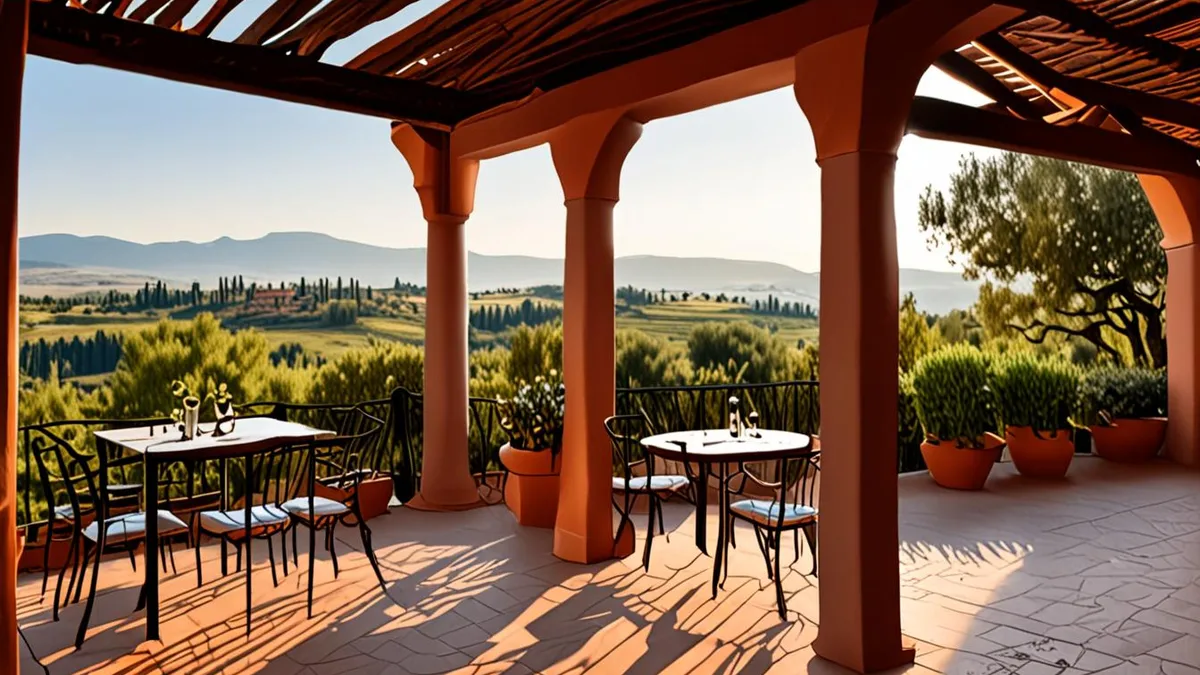
The postcard views and the practical reality of a Tuscan villa are often two different things. The main villa regions — Chianti, Val d’Orcia and the hills around Siena — are exactly where the countryside looks its best, and that is precisely because they sit away from everything. Villas here are commonly 20-40 km from the nearest decent-sized town, which means a dinner out is rarely a spontaneous decision.
This is why a rental car is essential for a villa stay, not a nice-to-have. You will drive for groceries, for wine tastings, for every meal you don’t cook yourself. The roads are often narrow, unpaved in stretches, and unlit after dark, so factor in that someone in your group stays on driving duty all week.
Where hotels have the edge
Many countryside hotels sit in or right next to walkable hill towns, so you can park once and reach restaurants, cafes and small shops on foot. That changes the rhythm of a trip: evenings become relaxed instead of a drive home along dark country roads after a bottle of Chianti.
In short, villas trade convenience for privacy, space and those sweeping views from your own terrace. Hotels trade seclusion for easy access to restaurants and town life. Neither is wrong — but if the thought of driving 30 minutes each way for dinner every night sounds tiring, weigh that honestly before choosing.
Season and Booking Lead Times
Tuscan villas run on a different clock than hotels. For a June to August week, most owners and agencies want you booked 4-6 months ahead, and the best properties in Chianti or Val d’Orcia can be gone even earlier. Summer weeks also come with minimum stays, typically 5-7 nights, so a quick three-night villa escape in July is rarely an option.
Hotels are far more forgiving. A mid-range countryside hotel can often be booked just 1-2 months ahead, and that flexibility usually holds even in the April-May and September-October shoulder seasons. If your trip dates are still undecided, a hotel simply gives you more room to maneuver.
Shoulder season changes the villa math too. Minimum-stay requirements soften outside peak summer, and prices drop for both stay types, so a week in late September can cost noticeably less than the same week in August. If you have fixed summer dates, planning ahead is non-negotiable, and our guide on when to book villas in the Mediterranean breaks the timing down in detail.
- Ask about changeover days. Many villas fix Saturday or Sunday arrivals in summer, so your flights need to line up with the owner’s weekly rotation.
- Check the cancellation terms. Villa deposits are often substantial and less refundable than hotel rates, so read the policy before committing early.
- Watch for late-availability deals. If a summer week is still unsold a few weeks out, some agencies discount it, which can be a rare bargain for flexible travelers.
What a Private Pool Villa Actually Gives You
A countryside villa is less like a hotel room and more like a temporary farmhouse that happens to have a pool. The standard setup includes a full kitchen, a private pool, generous outdoor dining space under a loggia or pergola, and weekly or midweek cleaning rather than daily housekeeping. Nobody leaves chocolates on your pillow; someone does leave you the keys and, usually, a bottle of the estate’s own olive oil.
The real luxury is space. A family of four or a group of six gets multiple bedrooms, several bathrooms, a living room and a garden, all to yourselves. Kids can roam the grounds, adults can spread out with books, and no one is stacking suitcases against a hotel wardrobe. For groups traveling together, that room to breathe is the single biggest argument for a villa.
The trade-off: you run the place
You also handle your own meals, grocery runs and daily planning. That means shopping in local towns, cooking dinners and deciding every morning what the day looks like. For longer, slower trips, this rhythm is a pleasure rather than a chore, and it’s often when travelers feel most connected to the countryside. For a fuller picture of the practical details, see what to expect from a villa with a private pool before you book.
When a Hotel Is the Smarter Countryside Choice
If your Tuscan countryside trip is short, a hotel wins almost by default. Most villas enforce minimum stays in summer that make a 2-4 night getaway nearly impossible, while a hotel is built for exactly this kind of trip: arrive on a Friday, leave on a Monday, no minimums to worry about. If your dates fall in the shoulder seasons of April-May or September-October, villa minimums tend to soften, but for peak summer weekends a hotel is usually the practical choice.
The economics also favor smaller parties. Couples and solo travelers staying in a villa end up paying for bedrooms nobody sleeps in and pool upkeep they barely use, since weekly rates are priced for the whole property. A hotel room is sized for the people actually in it, and you only pay for the nights you stay.
Then there’s the service side, which matters more in the countryside than you might expect. Many rural hotels include daily breakfast, offer concierge help with wine tastings and restaurant bookings, and have an on-site restaurant for dinner. That last point is bigger than it sounds: after a day of driving winding roads, being able to walk to dinner instead of getting back in the car is a genuine luxury.
- Staff can book the things you can’t. Small wineries and sought-after trattorias in wine country often require reservations, and hotel staff typically have the local contacts to secure them for you.
- Luggage and arrival logistics are simpler. A front desk means a defined check-in, help with bags and someone to call if your train or flight runs late, which villas rarely provide.
- On-site amenities fill short stays. A spa, pool terrace or wine cellar lets you relax for an afternoon without planning an excursion, which suits a 3-night trip better than a full day trip agenda.
Choosing Your Tuscan Stay
So which one fits your Tuscan countryside trip? If you are a group of six or more staying a full week in summer, a villa almost always gives you the best value and the most space. If you are a couple heading out for a few nights, a hotel near a walkable hill town is usually the easier, cheaper choice.
Before you book, ask yourself honestly how much driving, cooking and daily planning you want to do. A villa rewards travelers who enjoy slow mornings and self-catered dinners; a hotel suits anyone who prefers service and short stays. Match the stay type to your group size, trip length and season rather than to a generic ranking, and you will rarely regret it. If this helped you decide, leave a comment or share the article with your travel companions.