You’ve booked a romantic glamping weekend, packed the champagne, and driven two hours into the countryside—only to find your “cozy retreat for two” sits in the middle of a family campsite, three meters from a tent full of excitable kids and a dog named Biscuit. It’s a common story, and it’s completely avoidable. The difference between a magical escape and a disappointing one usually comes down to how carefully you choose the site, not how much you spend.
This guide walks you through every decision that matters: defining what romance actually means for you both, choosing between domes, safari tents, yurts and cabins, timing your stay for quiet and value, vetting privacy before you book, budgeting for the extras that make it special, and keeping the journey short enough to arrive relaxed. Follow these steps and your next romantic glamping weekend will feel like it was designed for exactly two people—because it was.
Decide What Romance Means for Your Glamping Weekend
Romance means different things to different couples, and the biggest booking mistakes happen when partners never discuss it. For some, it’s total seclusion—no neighbors visible, no sound but birdsong. For others, it’s a wood-fired hot tub under the stars with a bit of gentle life around the site. Before you search a single listing, agree on your shared definition.
Privacy is the factor that varies most between sites. Some glamping sites place standalone units in their own clearings, spaced so far apart you may not see another soul all weekend. Others arrange units around a shared field where you can hear your neighbors’ conversation through canvas. Neither is wrong, but they deliver very different weekends.
It’s also worth knowing that adults-only or couples-focused sites are a small minority of what’s out there—most sites welcome families. If children playing on the far side of the field would spoil the mood, filter specifically for adults-only sites rather than hoping for the best.
- En-suite bathroom: a private toilet and shower attached to your unit means no pre-dawn walks across a damp field in wellies—a genuine romance-killer at 6 a.m.
- Wood-fired hot tub: ask whether it’s private to your unit or shared, and whether you need to light and stoke the fire yourself an hour before use.
- Private deck or firepit: your own outdoor space with seating and a fire lets you spend the evening at your pitch rather than competing for a communal fire circle.
- Setting: lakeside pitches bring water views and birdlife, woodland offers seclusion and shade, coastal sites add sea air and sunset horizons, and vineyard locations pair well with local wine tastings.
Pick the Right Accommodation Type for Two
Once you know what romance looks like for you, match the accommodation type to it. Each structure has a distinct personality, and the wrong choice can undermine an otherwise perfect site. A couple chasing stargazing from bed has very different needs from one who wants a palatial tent with a proper sofa and a champagne table.
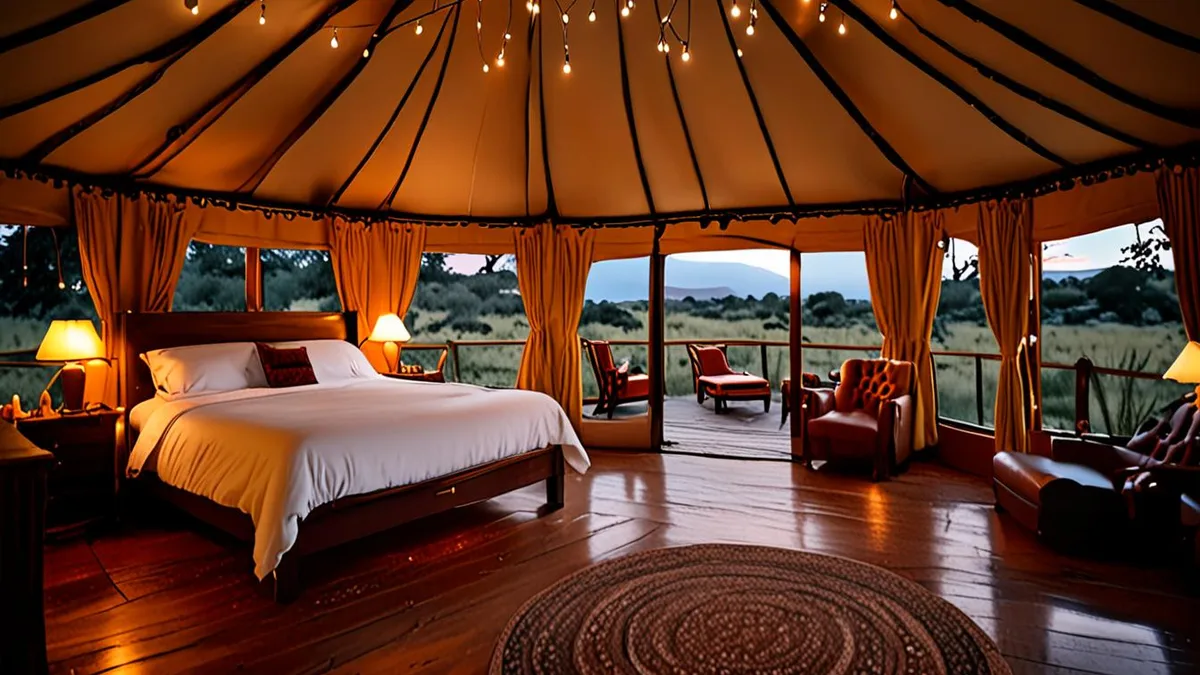
Domes and pods are the show-offs of the glamping world, with panoramic windows that turn the night sky into your ceiling. They insulate well and feel modern and snug. Yurts and cabins, on the other hand, hold warmth beautifully in colder months, and cabins—being solid structures—tend to be the most private option of all. If you’re torn between structures, our guide to comparing glamping accommodation types breaks down the differences in detail.
Safari tents offer the most space and a genuinely luxurious feel—proper beds, kitchen units, sometimes a wood-burner—but they’re often grouped in livelier multi-tent camps where you’ll have close neighbors.
- Check capacity honestly: some units marketed as “romantic” actually sleep four, which usually means bunk beds, family-sized layouts, and proximity to play areas—read the full sleeping configuration, not just the photos.
- Ask about the window situation: a dome with a clear roof panel above the bed is a stargazer’s dream, but check whether there are blackout options if you’re light-sensitive.
- Consider winter suitability: pods and cabins with solid walls and heating cope far better with a chilly shoulder-season night than a summer-weight safari tent.
Time Your Romantic Glamping Weekend for Quiet and Value
Timing does more for a romantic glamping weekend than almost any upgrade you can buy. May-June and September are the sweet spot: the weather is typically mild, school holidays are over or yet to begin, and rates sit well below the July-August peak. You get the same scenery and far fewer people sharing it. For a fuller breakdown of how seasons affect both crowds and cost, see our guide to the best time of year for glamping in the UK.
Midweek stays are the quietest and cheapest option of all. Peak-season weekend rates run 30-50% higher than midweek, so a Monday-to-Wednesday escape in September can cost the same as a Saturday night in August—while feeling twice as secluded. If you can both swing a couple of days off, this is the single best value move in romantic glamping.
How far ahead to book
For summer weekends at popular sites, book 2-3 months ahead to secure the best units—the most private pitches sell out first. In shoulder season, 4-6 weeks is often enough, though always check availability if you have a specific unit in mind.
If stargazing is on the agenda
Check sunset times for your dates before booking—there’s little romance in waiting until 10 p.m. for darkness in midsummer. Also look for sites in or near designated dark-sky areas, where light pollution is minimal and the Milky Way is genuinely visible on clear nights.
Vet Privacy, Noise and Site Layout Before You Book
Photos can make any pitch look secluded, so dig a little deeper before you hand over a deposit. The two questions that matter most: how far apart are the units, and what does your pitch back onto? A tent overlooking open farmland feels very different from one tucked against a woodland edge, where you can sit outside without worrying about the neighbors’ sightlines.
Site policies tell you a lot about the atmosphere too. Adults-only and couples-focused sites exist, but they’re a small minority—most glamping sites welcome families, and some even cater specifically to them. If a site caps group bookings or limits numbers per pitch, that’s usually a good sign that parties and rowdy weekends are less likely.
Recent reviews are your best source of honest detail. Scan the last few months for mentions of noise, dogs barking, children playing near the units, or shared facilities that get crowded. If you’re new to glamping altogether, a practical first-timer’s guide to choosing a glamping site covers the basics of comparing sites and reading between the lines of listings.
Finally, don’t accept “any available unit.” Ask for a specific pitch when you book.
- Ask for a site map or pitch photos: many hosts will happily show you exactly where your unit sits in relation to the others, the car park and any play areas.
- Request the end or corner pitch: units on the edge of a site typically have only one neighbor instead of two, which makes a real difference to how private the deck feels.
- Confirm orientation: a west-facing deck catches evening sun for sunset drinks, while a shaded north-facing pitch can feel gloomy by late afternoon.
- Ask about the walking route to your unit: a pitch a short stroll from the car park is romantic; one that requires hauling bags past every other tent is less so.
Budget for the Romantic Extras
Romantic two-person glamping in the UK typically runs £150-£350 per night, and that range covers everything from a simple woodland cabin to a fully kitted-out safari tent with a private bathroom. Where you land within it depends on the region, the season and how many comforts you consider non-negotiable. A lakeside dome in high summer will sit at the top of the scale, while a midweek cabin in quieter months often comes in well below.
The extras are where budgets quietly creep up. A private hot tub or wood-fired bath usually adds roughly £20-£50 per night, which is often worth it for a couples trip—but price it in from the start rather than treating it as a surprise at checkout. Weekend stays in peak season also carry a noticeable premium over midweek rates, so a Friday-to-Sunday break in July or August can end up costing the same as a longer midweek trip in a nicer unit, with more add-ons thrown in.
Before you book, check which add-ons are available and what they actually cost. A few worth pricing up:
- Welcome hampers: some sites offer local cheese, wine or breakfast provisions on arrival, which saves you a supermarket stop and makes the first evening effortless.
- In-tent dining: a delivered meal or private barbecue kit turns your deck into a restaurant without anyone driving anywhere.
- Firepit packages: bundles of seasoned firewood, kindling and marshmallows delivered to your pitch, useful if you’d rather not haul logs yourself.
- Celebration touches: flowers, prosecco or cake for anniversaries—many hosts will arrange these if you ask when booking rather than on arrival.
Keep the Journey Short and the Arrival Easy
The drive matters more than you’d think. If you’re leaving work on a Friday, choose a site under 90 minutes’ drive away so you arrive relaxed rather than frazzled by traffic and satnav arguments. A long journey on the first evening eats into the very time you’re paying for, and starting the weekend tired defeats the purpose of a romantic escape.
Get the arrival logistics right
Confirm check-in times before you book, and ask whether late arrival is possible if you won’t get there until after dark. Finding a pitch in a field by phone flashlight is nobody’s idea of romance. It’s also worth asking whether someone will meet you or whether it’s self check-in with a key safe.
Then check exactly what’s provided. Some glamping units come with proper bedding, towels, firewood and a full cooking kit; others expect you to bring your own. Packing for the wrong version of this is the most common first-timer mistake, so get the list in writing before you go.
Plan one thing, leave the rest open
Book one nearby activity—a walk, a vineyard visit, a village pub lunch—so the weekend has a shape to it. But resist the urge to fill both days. The best part of a couples glamping trip is often the unstructured time: slow breakfasts on the deck, an afternoon nap, or an evening by the fire with nowhere to be. Leave room for that.
Your Checklist for the Perfect Couples Escape
A romantic glamping weekend goes wrong for a simple reason: most sites are built for families, not couples. Book without checking, and you can easily end up in a shared field with thin tent walls, children playing nearby and none of the privacy you imagined. The fix is to plan around what romance actually means to you before you click reserve.
Start by defining your version of romance, then match the accommodation type to it, whether that’s a stargazing dome or a private cabin, and aim for May-June or September when sites are quieter and cheaper. Vet privacy and noise with the site before booking, budget £150-£350 per night plus any extras like a hot tub, and keep the drive under 90 minutes so you arrive relaxed. Get those five things right and the weekend almost plans itself. If this helped you plan your escape, leave a comment or share the article with someone who needs a weekend away.