Choosing where to stay in Marrakech usually comes down to two very different options: a characterful riad tucked inside the medina, or a sprawling garden villa on its outskirts. Both can be wonderful, but they suit different trips, and picking the wrong one can shape your whole stay. A traveler who books a villa hoping to wander out for dinner each night may find the taxi rides tedious, while a couple who books a riad for a week of lounging may crave more space and privacy.
This guide breaks the decision down clearly. We start with the core difference between riads and garden villas, then look at what medina riads actually offer day to day, and what life in a Palmeraie or Ourika road villa is really like. From there, we match each stay type to different kinds of trips, cover the best seasons and booking windows, and share practical checks for spotting a quality property. By the end, you should know exactly which base fits your Marrakech plans.
Riads vs Garden Villas: The Core Difference
The two main ways to stay in Marrakech are so different that it helps to picture them side by side. A riad is a traditional courtyard house hidden behind plain walls inside the medina, the old walled city. Step through the front door and the noise of the streets disappears: you find a central courtyard, often built around a fountain or a small plunge pool, with rooms opening onto it. Most riads are intimate affairs, typically offering 5-10 rooms, many of them converted family homes run by owners or small teams.
A garden villa is a different world entirely. These properties sit mainly in the Palmeraie, the palm grove north-east of the medina, and along the Ourika road that heads into the foothills. Plots usually span 1,000-5,000 m², planted with palms, olive trees and gardens, and almost always include a private pool. Villas typically come with staff such as a housekeeper or cook, and many are rented whole rather than by the room.
Two philosophies of staying
At its heart, the choice is walkable immersion versus space and privacy. A riad puts you steps from the souks, the squares and the everyday rhythm of the medina. A villa gives you room to breathe, a pool of your own and quiet evenings under the palms. Neither is better; they simply serve different trips, and the rest of this guide helps you work out which one serves yours.
Where to Stay in Marrakech: Medina Riads Explained
Staying in a riad means living inside the medina, Marrakech’s old walled city, which is compact at roughly 1-2 km across and largely car-free in its core. That location is the whole point: from most riads, Jemaa el-Fnaa, the souks and Bahia Palace are all within a 10-15 minute walk. You can drop shopping bags back at your room, rest at midday and head out again without ever needing a taxi.
The experience inside is part of the charm too. Thick walls keep rooms naturally cool in the heat, rooftop terraces catch the afternoon sun and give you a view over the medina’s rooftops, and breakfast is typically served in the courtyard, often with fresh bread, pastries and mint tea. Many riads feel more like staying in a private home than a hotel, especially the smaller properties.
Practical realities to plan for
Two things are worth knowing before you book. First, sound carries remarkably well in the medina, so a room facing the internal courtyard will be noticeably quieter than one facing the street. If you are a light sleeper, request a courtyard room when you reserve. Second, cars cannot reach most riad doors, which means your luggage often has to be wheeled through narrow alleys, sometimes over uneven ground. Pack light, or message the riad in advance to confirm whether they offer a porter service to meet you at the nearest drop-off point.
Garden Villas in the Palmeraie and Beyond
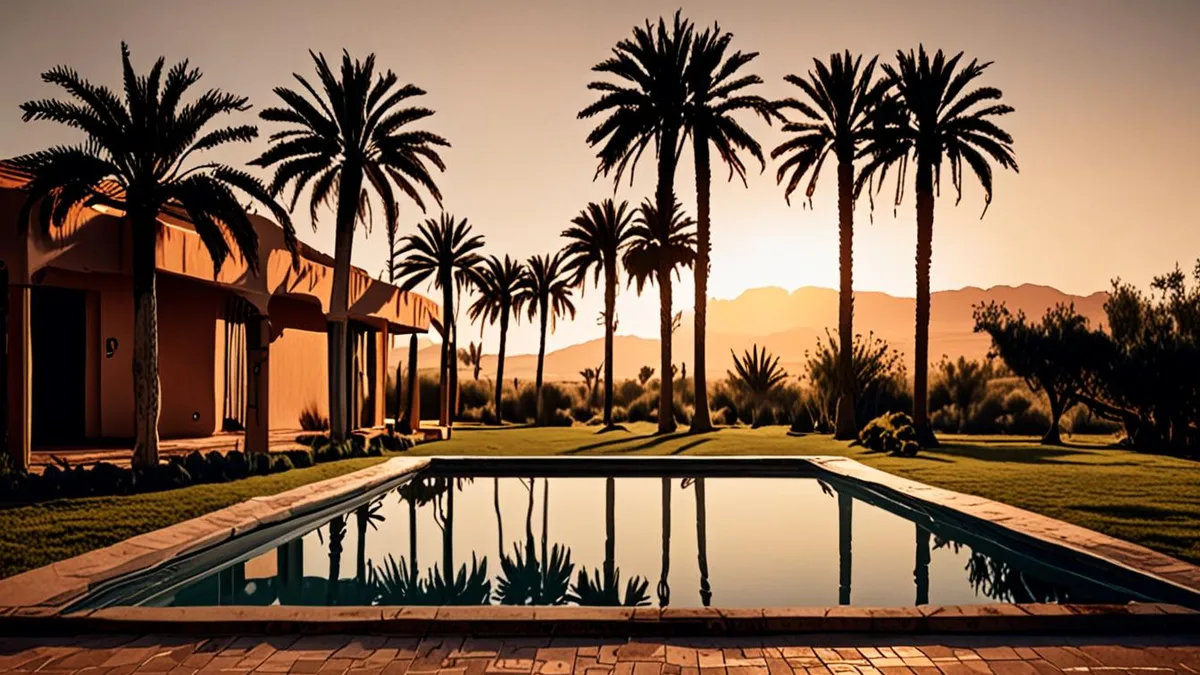
Garden villas trade the medina’s alleyways for open space. Most offer 3-5 bedrooms, private pools and gardens shaded by palms, which makes them ideal for groups of friends, multigenerational families or anyone planning a longer, slower stay. Instead of a room, you get a whole house: living areas, terraces, and grounds where children can play and adults can actually relax. If you have never rented one before, it helps to read up on what a villa with a private pool really involves before booking.
Location matters here. The Palmeraie, the classic villa zone, lies about 15-20 minutes by taxi north-east of the medina. That distance is manageable, but it shapes your days: a spontaneous evening in Jemaa el-Fnaa becomes a planned trip with a booked return taxi. Plan day trips and dinners around transfers rather than expecting to pop in and out.
Staff and the cooler alternative
Many villas come with a cook or housekeeper included, which can be a highlight of the stay, from home-cooked tagines to breakfasts by the pool. Agree meal arrangements before arrival, including which meals you want covered, who buys the groceries and how those costs are handled. If you would rather be slightly further out, the Ourika road offers cooler foothill settings about 30-45 minutes from the city, with mountain views and fresher evening air, at the cost of even more reliance on taxis.
Which Stay Type Fits Your Trip
The right choice depends less on budget and more on how you plan to spend your days. If this is your first visit or you only have two or three nights, a riad is hard to beat. Step out of the door and Jemaa el-Fnaa, the souks and the main sights are all a short walk away, so you can pop back to your room for a rest in the middle of the day instead of committing to a full outing.
Villas work better when your group is bigger than a couple and you want the accommodation itself to be part of the experience. Think long mornings by the private pool, lunches prepared by the house cook and evenings when nobody has to get dressed for dinner. This is also the natural fit for wellness-focused trips, where yoga on the terrace and quiet matter more than being steps from the medina’s noise. If you want a broader comparison of stay types beyond Marrakech, our guide on choosing between a villa and a resort breaks the trade-offs down in more detail.
Couples usually fall into two camps: those chasing atmosphere and those chasing calm. A quick way to decide:
- Atmosphere seekers: riads put you above rooftop restaurants and call to prayer at dusk, with breakfast in a courtyard that feels like a film set.
- Quiet-evening types: villas in the Palmeraie give you stars, silence and a pool lit at night, with no call to prayer waking you at dawn.
- Mixed groups: if half your party wants souks and half wants sunbeds, a riad for the first nights and a villa for the rest keeps everyone happy.
Best Seasons and Booking Windows
Timing shapes both your experience and your bill. October to April is peak season, when daytime temperatures sit at a comfortable 18-25°C and the city feels made for walking. This is when riads and villas fill up fastest: aim to book a riad 2-3 months ahead and a villa 3-4 months ahead, since larger properties with a single kitchen and pool have less flexibility than a riad with a handful of rooms.
May and September are the shoulder months, and they are a smart traveler’s secret. Crowds thin out, rates typically drop by roughly 20-30%, and the weather is still pleasant enough for sightseeing in the morning and the pool in the afternoon. If your dates are flexible, these two months offer some of the best value of the year. The same logic applies across the region, as we explain in our guide to the best time to book villas in the Mediterranean.
Summer heat and Ramadan
July and August are a different story: daytime temperatures often exceed 38°C, which pushes most visitors toward pools and shaded gardens rather than the souks at midday. If you travel in summer, a villa with a private pool shifts from nice-to-have to almost essential. Ramadan also matters for medina stays. Its dates shift each year with the lunar calendar, and during the fasting month some medina restaurants and rooftop kitchens operate reduced hours during the day. Check how your chosen riad handles breakfast and dinner before you book if your trip overlaps with Ramadan.
How to Spot a Quality Riad or Villa
Not all riads and villas are equal, and photos hide a lot. The three most common complaints in reviews are weak air conditioning, poor water pressure and tired rooftops, so read the most recent reviews specifically for those three things. A gorgeous courtyard means little if you cannot sleep in July or take a decent shower before dinner.
Location claims deserve equal skepticism. Listings say things like “5 minutes from Jemaa el-Fnaa” when the real walk, once you factor in the alleys, can stretch to 20 minutes. Drop the pin on a map yourself and check exactly where the property sits before paying a deposit.
For villas, two practical questions matter more than the photos of the pool. Ask whether the pool is heated if you are traveling in winter, since an unheated pool in January can be unusable, and confirm whether staff live on site, which changes the level of privacy you can expect. A few extra checks worth running:
- Ask for the transfer time by name: a villa “near Marrakech” could be a 40-minute drive, so get the actual taxi duration in writing before booking.
- Confirm meal arrangements early: if a cook or housekeeper is included, agree the menu, shopping costs and whether groceries are billed separately before arrival.
- Count the rooms: properties with fewer than 10 rooms generally deliver more personal service, since the small team learns your routine by the second day.
Wrapping Up Your Marrakech Base
So which base wins the riad-versus-villa question? Riads take the prize on location and atmosphere, putting you steps from the medina’s sights and sounds, while villas win on space, pools and privacy. Neither is better in absolute terms; the right choice depends on your group size, the season, and how much time you actually want to spend in the medina.
If you are traveling during the October to April peak, book earlier rather than later, and you will have the right base locked in before the best rooms and villas disappear. Whichever you choose, a well-matched stay turns Marrakech from a trip you survive into one you savor. If this guide helped you decide, leave a comment with your pick or share it with a fellow traveler.