Choosing where to sleep on safari is one of the biggest decisions you’ll make when planning a trip to Africa, and for many travelers it comes down to a safari lodge vs tented camp. Both promise incredible game viewing and memorable evenings around the fire, but they deliver very different experiences once the sun goes down.
The confusion is understandable. A luxury tented camp can cost more than a mid-range lodge, yet offer fewer amenities, while a large lodge may feel more like a resort than a bush retreat. In this guide, we break down what actually separates the two, from construction and camp size to comfort, pricing and atmosphere. We’ll also compare costs, look at how the seasons affect rates and availability, and help you match your choice of stay to your travel dates, group size and the kind of bush experience you’re after.
What Defines a Safari Lodge vs Tented Camp
The most obvious difference between a safari lodge and a tented camp is the building material. Lodges are permanent structures with solid walls, stone or thatch roofs, and full facilities on site. Think swimming pools, restaurants, bars and often a shop or curio corner. Once you check in, a lodge functions much like a country hotel that happens to sit beside a waterhole.
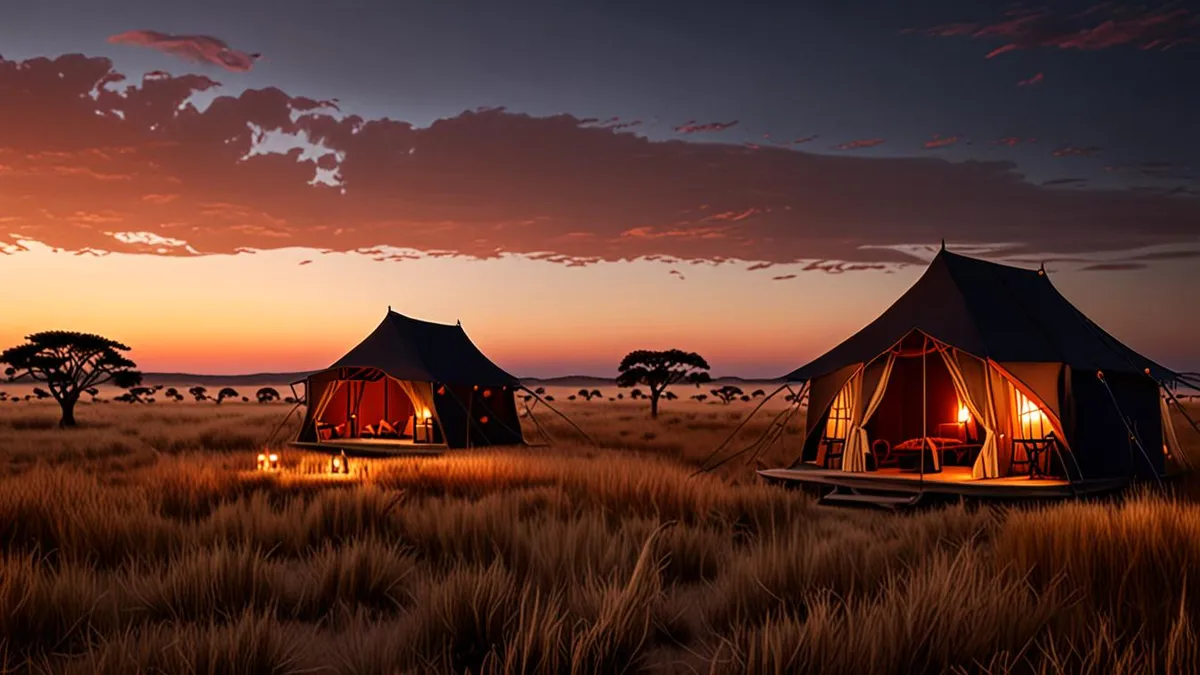
Tented camps, on the other hand, put you under canvas. That word covers a huge range. At the basic end, you might have a simple dome tent with shared ablution blocks and camp beds. At the ultra-luxurious end, you’ll find spacious canvas suites on raised wooden decks, proper beds with linen, en-suite bathrooms and private verandas overlooking the river or plain. The canvas is the constant; everything else scales with the price tag.
Size matters more than you think
Camp sizes differ sharply between the two styles. Tented camps typically host just 8-20 guests at a time, which shapes everything from dinner table conversation to how many vehicles head out on a game drive. Lodges often accommodate 30-80 guests, which brings more energy, more staff and more scheduled activities. Neither is better, but the guest count changes the feel of your entire safari, so it’s worth deciding early whether you want the bush to feel personal or sociable.
Comfort and Amenities Compared
If creature comforts top your list, a permanent lodge will usually deliver more of them. Because lodges are built structures, they can support air conditioning, gyms, spas and reliable Wi-Fi year-round, regardless of weather or season. Many also have multiple dining venues, swimming pools and covered lounges, so there’s always somewhere comfortable to spend the hot midday hours between game drives.
Luxury tented camps have closed the gap considerably. Expect en-suite bathrooms, proper flushing toilets and hot bucket showers or plumbed hot water in most high-end camps. What you generally won’t find are the extras: gyms, spas and constant connectivity are rare under canvas. Many camps also run on solar power and switch off Wi-Fi or electricity for part of the day, which some guests come to love.
- Hot water timing: In classic tented camps, staff often fill your bucket shower on request, so you shower when you ask rather than whenever you like.
- Lighting levels: Tented camps usually rely on low solar lighting and lanterns after dark, keeping the camp dim and atmospheric rather than brightly lit.
- Canvas acoustics: Zip your tent flap and you’ll still hear everything outside, from rustling grass to lions calling in the distance.
- Insect reality: Canvas means more chances of a beetle or moth inside your tent; lodges, with sealed walls and screened windows, keep most of that outside.
None of this makes one style more comfortable in practice. It depends on whether you want your nights sealed off from the bush or woven into it.
Cost Breakdown: Lodge Rates vs Tented Camp Rates
Safari pricing surprises many first-time travelers, because the stay and the safari are usually bundled together. Rates typically include your accommodation, all meals and game drives, sometimes drinks and park fees too, so always check exactly what’s covered before comparing numbers.
Permanent lodges typically run $250-$1,000+ per person per night, depending on the country, the reserve and the level of luxury. A comfortable mid-range lodge in a popular park sits in the middle of that band, while flagship properties at the top private concessions push well past it.
What luxury tented camps charge
Luxury tented camps range from $300-$1,200 per person per night, so the top end actually exceeds most lodges. Small camps carry high staffing costs per guest, and exclusivity is priced accordingly. A six-tent camp with a private guide and a prime location can easily outcost a 60-room lodge.
How to pay less
Timing is your biggest lever. During green season, roughly November-March, rates can drop 30-40% below peak prices, and tented camps often discount more aggressively than lodges to fill their few tents. You trade some game viewing ease for dramatic skies, newborn animals and far fewer vehicles at sightings. If you’re curious how unusual stays are priced in general, our guide to what a treehouse lodge stay costs in 2025 offers a useful comparison point. As always, rates shift yearly, so confirm current prices with operators before booking.
Wildlife Experience and Camp Atmosphere
The biggest difference between a lodge and a tented camp often shows up not in the room itself, but in how the day unfolds around it. With a small camp hosting only 8-20 guests, everything gets easier to arrange. Vehicles rarely fill up, so you can linger with a leopard sighting instead of being called back on schedule, and guides can adjust the route on the fly when word comes in over the radio about a fresh lion kill.
The social side of bigger lodges
Larger lodges, which often accommodate 30-80 guests, work differently. Game drives tend to follow set departure times, and meals are usually served in a shared dining room or buffet setting. For many travelers this is a plus rather than a drawback: it is easy to meet fellow safari-goers, swap sightings over dinner, and enjoy the energy of a busier property. If you like structure and company, a lodge delivers both.
Then there is the night. Canvas is thin, and that is the point. In a tented camp you fall asleep to real bush ambience: hyenas whooping in the distance, hippos grunting on their way to graze, the rustle of something moving past your veranda. A lodge with solid walls mutes much of that, which some guests find restful and others find a little too insulated. If the sounds of the wild at night are part of why you are going, a tent puts you right in the middle of them.
Seasons and Booking Windows for Safari Lodge vs Tented Camp
Timing shapes your safari more than any other decision, and it interacts directly with where you stay. Game viewing is strongest in the dry months, when animals gather at water sources and vegetation thins out, but peak demand means peak prices and limited availability. The good news is that a little forward planning solves most of it. A few practical steps will keep your planning on track.
- Match your dates to the region. In East Africa, dry season game viewing runs June-October. In southern Africa, the equivalent window is May-October. Either way, you are aiming for the months when wildlife is easiest to find and roads are at their most passable.
- Target the Migration if it is a priority. River crossings in the Masai Mara happen roughly July-September. These weeks are among the most sought-after in all of African travel, so availability disappears early and rates sit at the top of the range.
- Book well ahead for peak season. Reserve your stay 9-12 months in advance if you want first pick of camps and rooms. This matters even more for small tented camps, which have only a handful of tents to sell each night.
- Check seasonal closures. Many tented camps pull up stakes and close for several weeks during the April-May rainy season, so verify your chosen camp is actually open for your dates before you book flights.
Flexible travelers can flip this advice to their advantage. Shifting your trip into the green season, roughly November-March, often means lower rates, quieter camps and dramatic skies for photography, with the trade-off of occasional rain and thicker bush. If Kenya is on your shortlist, it helps to read up on property types before committing to dates. A good starting point is this first-timer’s guide to choosing a safari lodge in Kenya, which walks through the decision in detail. Once your dates and stay type are settled, the rest of the trip usually falls into place quickly.
Who Should Choose Which Stay
Neither stay type is objectively better; the right choice depends on who is traveling and what the trip is for. Families with young children often feel most comfortable in a lodge, where solid walls, fenced grounds in some cases, and a full staff make supervision simpler. First-timers frequently land on lodges for the same reason: everything is familiar, and there is a pool to relax by between drives.
Honeymooners and serious photographers tend to move in the opposite direction. A camp with a dozen guests means private vehicles can often be arranged, flexible departure times are easier to negotiate, and there is no crowd jostling for the best angle at a sighting. The sense of having a corner of the bush to yourselves is hard to replicate at a larger property.
- Families: Look for lodges with family rooms or adjoining units, plus dedicated children’s programs, so kids are entertained and supervised between game drives.
- Honeymooners: Ask small camps about private dinners, outdoor showers, and sole-use vehicle options, which many offer as standard touches for couples.
- Photographers: Prioritize camps that provide beanbags, charging facilities in-tent, and guides experienced at positioning vehicles for light and sightlines.
- Budget travelers: Target tented camps during green season, when nightly rates fall well below peak levels and you keep the intimate atmosphere at a lower cost.
Whichever camp you lean toward, be honest about your priorities before booking. A family that values space and facilities will be happier in a lodge, while a couple chasing exclusivity will find it in a small tented camp. Green season is the great equalizer for travelers watching their budget, since the same camps cost far less and the bush is lush and quiet.
Wrapping Up Your Safari Stay Choice
Choosing between a safari lodge and a tented camp comes down to what you want from the bush. Lodges deliver comfort, sealed-off rooms and a full set of amenities, while tented camps trade some of that polish for intimacy, smaller guest numbers and a stronger sense of being inside the wilderness. Neither is the better choice in absolute terms; they simply suit different travelers.
Since rates overlap broadly between the two stay types, your travel dates, group size and preferred atmosphere should drive the decision more than the canvas-versus-walls question. Match the stay to your trip, and the safari will take care of itself. If this helped you weigh up your options, leave a comment or share the article with a fellow traveler.