You’ve found a lovely glamping site, but the yurts and cabins are booked or simply bigger than you need. That leaves the smaller options: a pod, a bell tent or a tipi. In this pod vs bell tent vs tipi comparison, we break down what each one actually offers, so you can match the right structure to your trip, your budget and the season you’re traveling in.
Each option suits a different kind of stay. Wooden pods are insulated and usable year-round, while canvas bell tents and tipis are best from roughly May to September in the UK. Sleeping capacity and nightly prices differ too, with pods typically sleeping 2-4 people and tipis taking up to 6. Below, we cover what each structure is really like inside, how they compare on price, how to choose by season and weather, and how to book the right small glamping stay for your trip.
What a Glamping Pod Really Offers
A glamping pod is essentially a small wooden cabin, and that solid construction changes everything about how it feels to stay in one. The timber walls are insulated, which means the inside stays warm even on frosty nights. Of the three options compared here, a pod is the only one genuinely suited to winter stays, since canvas tents simply can’t hold heat the same way.
Size and sleeping arrangements
Most pods sleep 2-4 people, usually built around a fixed double bed with optional bunks for extra guests. The footprint is compact, with most pods measuring around 3-4 meters across. That’s enough space for a bed, some storage and a bit of floor room, but not much more.
The trade-off for that cozy footprint is headroom. Because pod walls curve inward near the roof, standing room is limited at the edges, and you’ll find yourself hunching as you move around the sides. Tall guests may feel cramped compared with a canvas tent, where you can usually walk upright across most of the floor. If you’re over six feet, it’s worth standing inside a pod at a show or site open day before committing to a week-long stay.
What you lose in ceiling height, though, you gain in security and comfort. A pod keeps out wind, rain and midges far better than canvas, and there’s no pegging, guy lines or storm worry. You arrive, unlock the door and you’re home.
Inside a Bell Tent: Space and Comfort
A bell tent is the classic single-pole canvas design you’ve probably spotted at festivals, and its shape is its biggest selling point. With a diameter of 4-5 meters, you get generous standing headroom in the center, so you can walk around the middle of the tent without stooping. The sloping walls mean space tapers off toward the edges, but the usable floor area still feels far more open than a pod.
What you’ll find inside
Furnished bell tents typically come with an air mattress or a proper bed, rugs on the groundsheet and lanterns for evening light. It’s a comfortable, romantic setup, and many sites let you choose between basic and fully dressed versions. What you won’t usually find is heating: beyond a fire pit outside, there’s nothing to warm the canvas, so nights can feel chilly even in summer.
The weather catch
Canvas needs dry weather to stay pleasant, so a bell tent is really a fair-weather stay in the UK. Book outside the warmer months and you’re gambling on rain, mud and damp bedding. If you like the idea of canvas living but want more headroom or a different shape, it helps to compare bell tents with other glamping structures like yurts, domes and cabins before you commit.
In short, a bell tent delivers space and charm in exchange for seasonality. Pick your dates within the dry months, pack warm layers for the night, and it’s a lovely way to camp without the pegging and hauling of a regular tent.
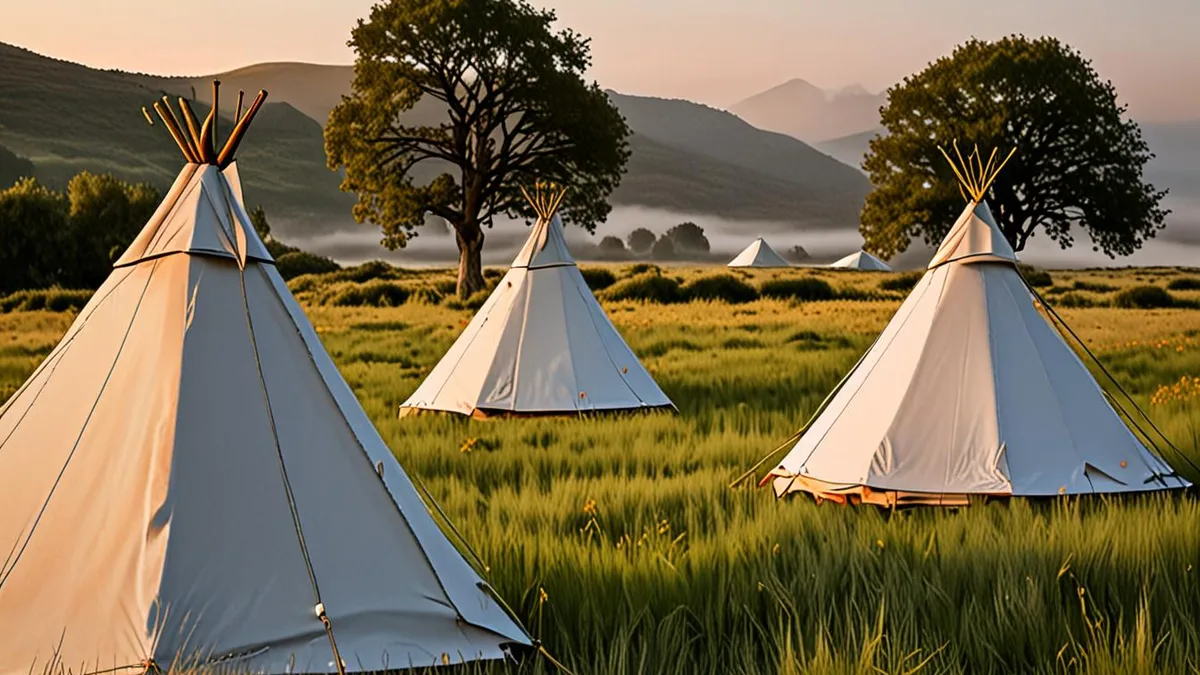
Tipi Stays: Height, Heat and Atmosphere
If atmosphere is what you’re after, nothing beats a tipi. The tall cone shape offers the most interior height of the three options, often reaching 4-5 meters at the center pole. Standing under that peak, with canvas rising high above you, feels completely different from lying in a low tent or sitting in a compact pod.
A real fire inside
Many tipis allow a small central fire, which sets them apart from both pods and bell tents. The fire gives genuine warmth through the evening and night, plus that unmistakable smoky smell and flickering light that makes a tipi stay memorable. Be prepared for the smoke: it’s part of the experience, and most sites leave a gap at the top of the cone to let it escape, but sensitive sleepers should ask how the fire is managed overnight.
Space for groups
Tipis typically sleep 2-6 people on floor mattresses or low beds, which makes them the natural pick for groups of friends or larger families. The trade-off is that floor sleeping doesn’t suit everyone, and couples wanting a proper bed with a mattress height like a pod’s may find a tipi less comfortable despite its impressive space.
Like all canvas stays, tipis depend on dry weather, so they’re best booked within the summer window in the UK. Bring warm pajamas and layers, since the fire helps but canvas nights can still turn cool. If you want the most character and the most capacity in one structure, and you’re happy to trade a solid bed and sealed walls for open canvas and a crackling fire, a tipi is hard to top.
Pod vs Bell Tent vs Tipi on Price
Price is often the deciding factor between these three options, and the good news is that all three sit well below the cost of most boutique hotels. Still, there are clear differences in what you get for your money, and the cheapest option is not always the one you might expect.
Wooden pods are generally the most affordable of the three, with nightly rates typically running from around £60 to £120. Because pods stay open all year, site owners can fill them midweek and in the off-season, which is when the best value appears. A midweek pod stay in November can cost noticeably less than the same pod in August.
Bell tents usually fall in the £70 to £150 range during peak season. The lower end gets you a tent with an air mattress and basic furnishings, while the top end buys a furnished setup with a proper bed, rugs and styling. Tipis are typically the priciest, at roughly £80 to £160 in high season, largely because of their size and the central fire feature.
- Midweek beats weekends: canvas stays in particular often drop by a meaningful amount from Monday to Thursday, so a flexible schedule can stretch your budget further.
- Furnishings drive the price: two bell tents on the same site can differ by £40 or more a night depending on whether you get an air mattress or a real bed with linens.
- Group stays change the math: a tipi sleeping six can work out cheaper per person than three separate pods, even at the higher headline rate.
- Off-season only applies to pods: since bell tents and tipis close outside the dry months, their lowest rates are usually early or late in their short season.
Choosing by Season and Weather
Weather is the single biggest factor in choosing between these three stays. A wooden pod is the year-round option: the insulated timber walls hold warmth even through frosty winter nights, which is exactly when canvas options are packed away for the season. If you want a January escape with a proper roof over your head, a pod is realistically your only choice of the three.
Bell tents and tipis are fair-weather stays. Canvas needs dry conditions to stay comfortable, so in the UK that generally means booking within the May to September window. Even in summer, canvas nights can turn chilly, so pack warm layers and thick socks even if the forecast looks friendly. If you are unsure when to go, it helps to read up on the best seasons and prices for a UK glamping trip before you commit.
Make the shoulder season work for you
May and September are the sweet spots for canvas stays. Nights are usually still mild enough to sleep comfortably, sites are quieter, and prices tend to dip below peak-season rates. A bell tent in mid-September can feel far more peaceful than the same tent in late July, often for less money.
If your trip is fixed to winter dates, skip the canvas debate entirely and book a pod. If you are flexible and chasing the best weather-to-price ratio, aim for the edges of the summer season instead of its crowded middle.
How to Book the Right Small Glamping Stay
Booking a small glamping stay is straightforward, but a little planning makes the difference between a great trip and a disappointing one. The three options suit different travelers, and the details vary more between sites than most first-timers expect. Work through these steps before you pay a deposit, and you will avoid the mistakes that catch people out every summer.
- Book canvas stays early for summer. Bell tents and tipis for summer weekends should typically be reserved 2-4 months ahead, because the best sites sell out first. Pods are easier to find last minute, especially outside peak season and during the colder months when canvas stays close.
- Check exactly what is included. Some sites provide bedding, towels, cooking facilities and proper toilets; others leave you bringing a sleeping bag and walking to a shared washblock. Ask before booking, as the difference between basic and full-service sites is significant.
- Match the capacity to your group. Pods suit couples and small families best, bell tents work well for small families, and tipis can take larger groups of up to 6. Squeezing a group into too small a structure is the most common booking mistake, so count heads before you choose.
- Read the site’s facilities list carefully. Fire pits, parking next to your unit, and dog policies vary widely, and each one can shape your stay. If a campfire matters to you, confirm whether one is allowed rather than assuming.
If this is your first glamping trip, it pays to read a practical first-timer’s guide to choosing a glamping site before you commit. A few extra minutes of checking now saves you from arriving at a site that does not match what you pictured, or paying for facilities you will never use.
Which Small Glamping Option Fits Your Trip
So which one fits your trip? If you want warmth, all-season use and the lowest price, the wooden pod is the clear winner. Insulated timber walls keep it cozy even on frosty winter nights, and at roughly £60-£120 per night it undercuts both canvas options, though the space is snug for taller guests.
Bell tents win on space and that classic festival-style charm, with proper standing headroom and room for small families, as long as you book within the dry May to September window. Tipis offer the most atmosphere and the greatest capacity for groups, but they cost the most and depend entirely on fair weather. In the end, the right choice comes down to your season, your group size, and whether you value solid insulation or open canvas space. If this helped you decide, leave a comment or share the article with your travel crew.