Booking a safari lodge is easy. Knowing what actually happens once you’re there is another matter. Many first-timers arrive with no idea that a game drive starts with a wake-up knock before sunrise, or that there are unwritten rules about staying seated and keeping quiet when a leopard appears. That gap between expectation and reality can make your first day feel more confusing than it should.
This guide walks you through the whole experience, step by step. We’ll cover what a game drive actually involves, how a typical safari day flows from early morning coffee to sundowner drinks, and when to go for the best wildlife viewing. You’ll also find practical notes on costs, etiquette and safety rules, plus a packing list built for cold early starts and dusty tracks. By the end, you’ll know exactly what to expect from your first game drive, so you can spend your energy on the animals instead of the logistics.
What a Game Drive Actually Involves
A game drive is a guided outing in a 4×4 vehicle, usually lasting 3 to 4 hours, designed to get you close to wildlife in its natural habitat. You’ll travel in either an open-sided vehicle, which gives you unobstructed views and great photo angles, or a closed vehicle with pop-up roofs, which some parks require. A trained guide leads the drive, and at many lodges a spotter sits up front as well, scanning the bush for movement that’s easy to miss.
Vehicles typically carry 4 to 7 guests plus the guide, which means everyone has a seat along a side or the front. Most lodges rotate seating between drives, so over a few days everyone gets the much-coveted window spot. Don’t stress about where you sit on day one.
Why routes change on the fly
Guides at most lodges communicate over radio networks, sharing sightings in real time. If a guide elsewhere spots a lion pride or a rare animal, your driver may change direction mid-drive to head there. This flexibility is one of the biggest advantages of a guided drive: no two outings follow the same route, and the best sightings often come from these tip-offs rather than luck alone.
A Typical Day: From Wake-Up Call to Sundowner
A safari day has a rhythm that surprises most first-timers: it’s built around when animals are active, not when humans prefer to sleep. Predators hunt in the cool hours, herbivores move at dawn and dusk, and the midday heat sends nearly everything into the shade. Lodges plan their entire schedule around this pattern, which is why your alarm rings long before sunrise and why the middle of the day is deliberately left free. Once you understand the logic, the early starts stop feeling like a chore and start feeling like the whole point of being there. Here’s how a typical day unfolds at most safari lodges.
- Wake-up call. A staff member knocks on your door between 5:30 and 6:30 am, depending on the lodge and season. It feels brutal the first morning, but it’s worth it, since predators are most active before the heat sets in.
- Pre-drive snack. Before you climb into the vehicle, there’s usually coffee, tea and something light like rusks or fruit available. Keep it small; a full breakfast comes later.
- Morning game drive. You’ll head out in the coolest hours of the day, when wildlife is at its liveliest, and return to camp by mid-morning.
- Midday break. With brunch served after the drive, the middle of the day is for resting, reading or pool time. Animals are least active in the midday heat, so there’s little to see out there anyway.
- Afternoon drive and sundowner. The second drive runs roughly from 3:30 to 6:30 pm, often pausing at a scenic spot for a sundowner drink as the sun drops. It’s a safari tradition and a great chance to stretch your legs safely with the group.
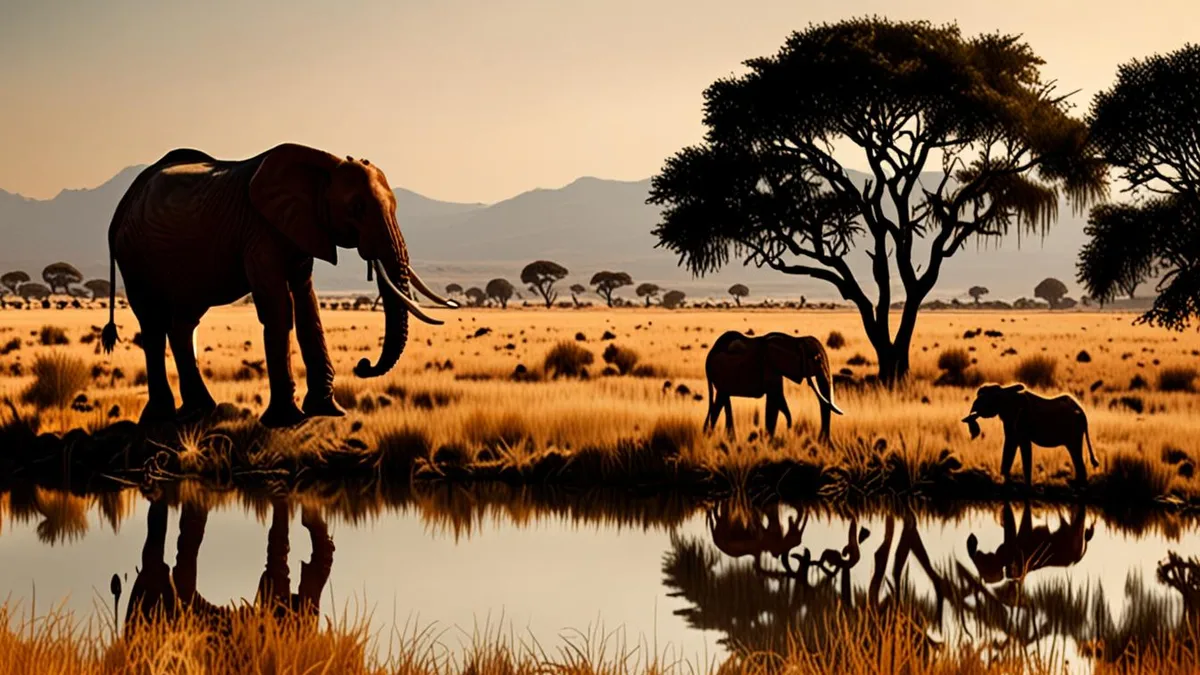
By the time you’re back at camp, dinner is close at hand, and most guests are asleep early, ready to repeat the cycle. The routine sounds demanding on paper, but in practice it’s paced so you never feel rushed. The long midday lull gives you real time to unwind, catch up on sleep or simply sit by the pool watching elephants at a distant waterhole. Many travelers find that by day two or three, their body clock has adjusted and they’re waking up naturally before the knock on the door. Treat the schedule as part of the experience rather than an inconvenience, and the whole safari falls into place.
When to Go: Seasons and Booking Lead Times
Timing shapes everything on a safari: how many animals you see, how much you pay and how far ahead you need to book. Kenya’s dry seasons, running from June to October and January to February, offer the best game viewing. With rain scarce, vegetation thins out and animals gather at water sources, making them far easier to find from a vehicle.
Peak season and the Great Migration
The July to October window overlaps with the Great Migration, when enormous herds move through the Maasai Mara. This is peak season in every sense: sightings can be spectacular, but lodges command their highest rates and rooms sell out early. If the migration is on your bucket list, plan accordingly.
Booking lead times matter just as much as timing. For peak season travel, aim to reserve your lodge 6 to 12 months ahead. For shoulder months like June or November, 3 to 6 months of lead time can still work, and you may find better availability and softer rates. Whenever you plan to travel, it’s smart to confirm current park fees and lodge rates directly, since these change from year to year.
What Game Drives Cost and What’s Included
One of the first questions first-timers ask is what a safari lodge actually costs, and the honest answer is that the range is enormous. At the budget end, simple tented camps start around $150 per person per night. Mid-range lodges sit comfortably in the middle, while the most luxurious properties can easily exceed $1,500 per person per night, especially in famous reserves during peak months.
The good news is that most lodges price on an all-inclusive basis, so the nightly rate typically covers far more than just your bed. Before you compare prices between lodges, check exactly what is bundled in, because this is where the real value hides.
- Two daily game drives: most lodges include a morning and an afternoon drive in the rate, led by their own guides in shared vehicles.
- All meals: breakfast, lunch or brunch, and dinner are usually part of the package, often with snacks before drives.
- Park entry handled by the lodge: conservation and entrance fees apply in most national parks and reserves, and lodges that operate inside them typically arrange this for you. Always confirm the current fee and whether it appears on your bill.
- Drinks and laundry: these vary widely. Some luxury lodges include house drinks, while budget camps often charge for everything except water, so ask before you book.
A few extras are worth budgeting for. A private vehicle, meaning a 4×4 reserved just for your group instead of sharing with other guests, usually costs extra, roughly $250 to $500 per day depending on the lodge. It is a nice upgrade if you want flexibility on timing or are traveling with children. If you are weighing different styles of accommodation, our guide to what a treehouse lodge stay costs in 2025 breaks down pricing for another memorable lodge type.
Etiquette, Safety and Wildlife Viewing Rules
Game drives feel thrillingly close to the wild, but that closeness only works because everyone follows the same unwritten contract. Your guide is trained to follow park rules on wildlife distances, typically keeping 20 to 25 meters from big game, and reputable operators never drive off-road or chase animals for a better photo. If an animal moves away, you let it go. It sounds restrictive at first, but these limits are exactly what keep both you and the wildlife safe, and they are what allow lodges to offer such reliable, up-close sightings year after year.
From the guest side, the rules are simple but matter enormously. Stay seated throughout the drive and keep your voice down at sightings. A vehicle is designed so that animals perceive it as one large, neutral object, and the moment a person breaks that outline, the dynamic changes. Predators and elephants alike react to the human shape, not the vehicle, so your behavior directly shapes how close and how relaxed your sightings will be.
- Never stand up or dangle arms: rising above the vehicle’s silhouette can startle animals, and predators may instinctively treat movement outside the frame as prey behavior.
- No flash photography near animals: the sudden burst can spook even relaxed wildlife and ruin the sighting for every vehicle around you.
- Keep voices low at sightings: loud conversation stresses animals and can cause them to retreat, ending the viewing for everyone.
- Follow your guide’s instructions at all times: if your guide says move, freeze or stay down, do it immediately. They read animal behavior in ways you cannot.
- Stay inside the vehicle: vehicles are genuinely safe around wildlife, but only when you remain within them. Never lean out for a photo or step out to reposition.
Follow these basics and you will find that animals often behave remarkably calmly around vehicles, sometimes walking right past your window. That calm is earned, not luck. Respecting the rules is what makes the whole experience possible, and it is also the best way to ensure the next vehicle gets the same privilege you did.
What to Pack for a Game Drive
Packing for a game drive comes down to one thing: temperature swings. Drives leave before sunrise, when open vehicles are genuinely cold, often with a biting wind chill as you move. By mid-morning, the sun has warmed everything up fast, and you will be peeling off layers one by one.
The solution is neutral-coloured layers in khaki, olive and beige, which you can add or shed as the day warms. Light colors also blend into the landscape, which some guides prefer because bright shades can catch an animal’s attention at a sighting. White, for example, stands out sharply against dry grass, so save it for the pool.
- Binoculars: even with a good guide, most animals are spotted at a distance, and a pair of binoculars transforms a distant speck into a lion’s face. Many lodges have one or two pairs to share, but bringing your own means you never wait.
- A camera with at least 200mm of reach: a phone camera will disappoint at wildlife distances, so bring a zoom lens or camera with a minimum 200mm reach for shots that actually fill the frame.
- A dust bag or dry bag for electronics: dirt roads on safari are dusty or muddy depending on the season, and fine dust finds its way into every crevice of a camera or phone left exposed.
- Closed shoes: sturdy closed shoes protect your feet from dust, thorns and the cold floor of an open vehicle at dawn.
- A wide-brim hat and sunscreen: open vehicles offer zero shade, and hours of sun on your face and neck add up quickly.
- A light windbreaker: this is the single most useful layer for open vehicles, cutting the morning wind without making you overheat later.
Keep your kit in a small soft bag rather than a hard suitcase, since space beside your seat is limited and you will be shifting around at every sighting. A daypack that squashes flat works far better than a rigid carry-on. Zippered pockets help too, because bouncing dirt roads have a way of sending loose lenses and lip balm sliding across the floor.
Finally, leave the bright whites and dark blues at home: tsetse flies are reportedly drawn to dark colors, and blue in particular. Pack light, dress in layers, and you will barely notice the pre-dawn alarm.
Wrapping Up Your First Game Drive
Your first game drive is really just a guided outing in a 4×4: a wake-up knock before dawn, three to four hours of slowly tracking animals with a guide who knows exactly where to look, then back to the lodge for a long, lazy midday before heading out again in the late afternoon. There’s no mystery to it once you know the rhythm, and the relaxed pace between drives is part of the experience, not downtime you’re missing out on.
The rest comes down to timing and manners. Traveling in the dry season between June and October gives you the best odds of great sightings, and booking your lodge six to twelve months ahead secures those peak-season dates. Once you’re there, keep your distance from the animals, dress in neutral layers, bring binoculars, and trust your guide to lead the way. Do that, and your first game drive will likely be the highlight of your trip. Have questions or a first safari story of your own? Leave a comment or share this article.