Organizing a hen party that pleases everyone can feel impossible when your group spans different budgets, energy levels and tastes. Some guests want a proper celebration, others want peace and a good night’s sleep, and a few would rather never see a tent in their lives. A glamping hen party promises to fix all of this — real beds, shared fire pits and space to celebrate together — but only if you plan it right.
This guide walks you through the whole process, from why glamping suits mixed groups in the first place, to choosing between a yurt and a safari tent, timing your booking, setting a budget everyone can afford, vetting the site’s group policies, and planning food and activities around what the location offers. Follow the steps in order and you’ll end up with a weekend the whole group will remember — without the awkward money chats or a rained-out schedule.
Why a Glamping Hen Party Works for Mixed Groups
The best thing about a glamping hen party is that it finally stops the camping argument before it starts. Guests who would never sleep on a thin mat in a field get a real bed, heating and often a private bathroom, while the group still gets that outdoorsy, under-the-stars atmosphere that makes a weekend feel like an occasion rather than just a night out. Nobody has to rough it, and nobody has to miss out.
Bonding happens without an itinerary
Shared spaces do the social work for you. Evenings gravitate naturally to the fire pit, mornings start with everyone crammed into the dining barn for pancakes, and conversations that never happen over a loud restaurant table unfold on their own. You don’t need to schedule icebreaker games — the layout of a glamping site creates group time by default.
Your budget stretches further here, too. Most sites let you self-cater, so the group can cook big communal meals instead of paying for a hotel restaurant or a string of city dinners. Put the savings towards prosecco, decorations or a private activity, and you’ll often spend less overall than a hotel-based hen do while getting far more quality time together.
Choosing the Right Accommodation Type for Your Group
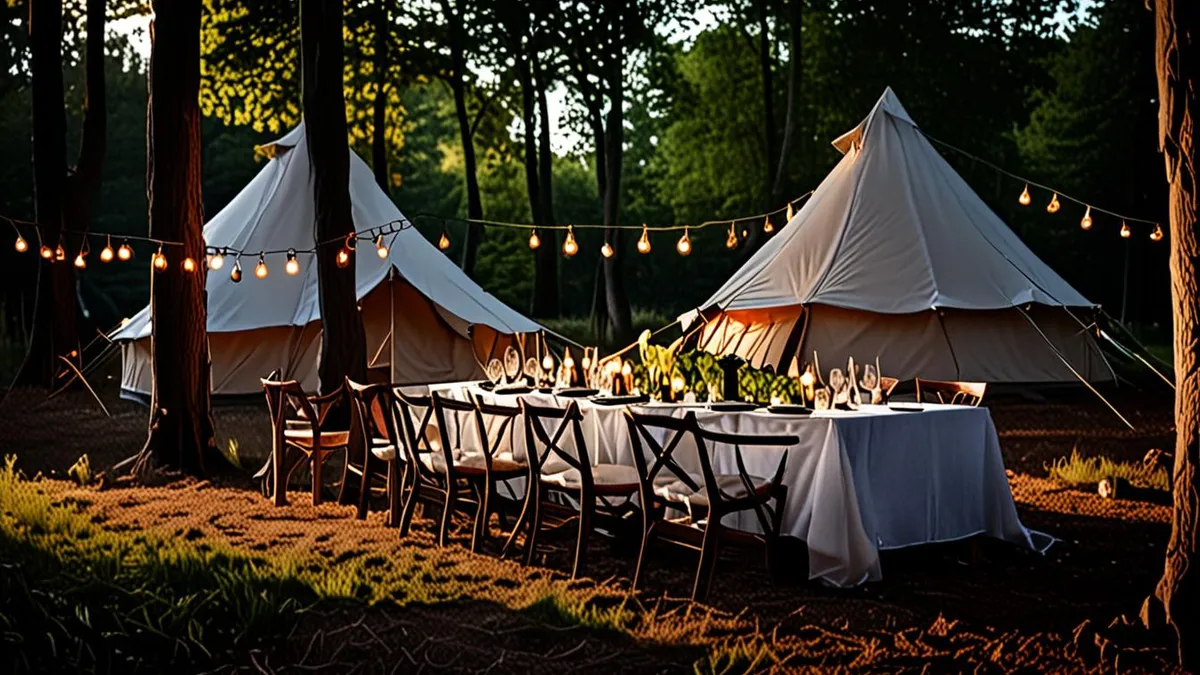
The accommodation you pick sets the tone for the whole weekend, so match it to your group rather than to a picture on Pinterest. Bell tents and yurts suit relaxed, bohemian-style hen parties — think fairy lights, acoustic playlists and mornings with coffee in the field. Safari tents and cabins offer more comfort: proper kitchens, solid walls and heating, which makes a real difference for older relatives or less outdoorsy friends. If you’re torn between styles, it helps to compare glamping accommodation types side by side before you commit.
Then ask the question that changes everything: can you hire the whole site exclusively? Having the place to yourselves means you can sing, dance and stay up late without worrying about other guests, and it turns a nice weekend into a private celebration. Ask about an exclusive-use surcharge when you enquire, as some sites quote it separately from the nightly rate. It’s also worth confirming whether the site regularly hosts hen groups at all, since a few quieter locations prefer not to.
Before you count heads against units, check the sleeping layouts:
- Couples versus singles: some units have one double bed while others are all singles, so a tent that “sleeps six” may only work for three friends who each want their own bed.
- Shared sleeping: yurts and bell tents often have everyone in one open space, which some guests love and others quietly dread — worth asking the group before booking.
- Unit count maths: most sites sleep 2–6 per unit, so a group of 12 typically needs 2–4 units depending on how people pair up.
- Bedding arrangements: confirm whether linens are provided or you need sleeping bags, especially for any fold-out or floor-level beds.
When to Book: Timing Your Glamping Hen Party
Glamping sites that welcome hen parties are popular for a reason, and the good ones fill up fast — especially for summer weekends. Getting the timing right is less about luck and more about working backwards from your date. If you’re flexible on the month, you can also save money simply by shifting the trip slightly, as the best time of year for glamping in the UK isn’t always the obvious one.
- Reserve the site 6–9 months ahead for June–August dates. Popular hen party sites sell out early for peak-season weekends, and the largest units go first — so if you need three safari tents, book as soon as the site opens its calendar.
- Consider May or September instead. These shoulder months typically bring lower prices, better availability and quieter sites, with milder weather that still works for fire pit evenings and outdoor activities.
- Send invites and collect deposits 3–4 months before the date. This gives guests enough notice to arrange childcare and time off, while giving you a realistic headcount to confirm with the site before their final balance is due.
Build a simple spreadsheet with names, deposits paid and dietary requirements, and update it as replies come in. Chasing eleven people for money is the least glamorous part of organizing a hen party, but doing it early means you can confirm final numbers with the site calmly instead of panicking a fortnight before the weekend.
It also pays to keep the chief bridesmaid or one trusted friend in the loop on deadlines. Share the booking confirmation and payment dates with them, so if you’re away or unreachable when a balance is due, someone else can step in. A shared note with the site’s contact details, arrival time and any group policies saves endless scrolling through inboxes later.
Finally, put the key dates in the group chat the moment they’re set: booking day, deposit deadline and final payment date. Guests are far more likely to pay on time when reminders come with a countdown rather than a chase-up, and you’ll spend the last few weeks before the hen do getting excited instead of worrying about money.
Setting a Budget Everyone Can Afford
Before you fall in love with a site, agree on a number. A sensible starting point is a per-person budget of £100–£250 for the whole weekend, covering accommodation, food and activities. That range works for most groups, but be honest about what your friends can actually afford — a budget that feels tight to half the group will cause friction long before the prosecco is opened.
Accommodation is the biggest line item, and sharing is where glamping wins. Peak-season glamping in the UK typically costs £150–£400 per night for a unit, but that figure covers the whole tent or cabin, not each guest. Split a safari tent between 4–6 people and the per-head cost drops dramatically compared to everyone booking single rooms. Since most glamping sites sleep 2–6 per unit, a group of 12 will usually need 2–4 units — do that math early so nobody gets a surprise. If you want a clearer picture of what a high-end unit actually includes for that money, this guide to luxury safari tent costs and comforts is a useful read before you commit.
Sort the extras before they sort you
The awkward money conversations at hen parties rarely come from the accommodation — they come from the extras. Decorations, prosecco, games, a private activity or a catered dinner can quietly double the bill if one person fronts the cost and chases everyone later. Agree upfront who pays for what, whether that is a shared kitty, a single organiser collecting deposits, or each guest covering her own extras. A simple spreadsheet sent with the invite solves most of it before anyone arrives.
Vetting the Site Before You Commit
Not every glamping site welcomes hen parties, and finding that out after paying a deposit is a painful way to learn. Some quiet, adult-only countryside sites actively turn away large celebratory groups, while others embrace them — so make this your first question before anything else. Ask directly whether hen and stag bookings are accepted, and whether there are any restrictions on group size or behavior.
The next thing to pin down is how the site handles group bookings. Many sites require full-group bookings and have minimum 2-night stays on weekends, which affects both your dates and your budget. If the site has several units, ask whether you must book all of them or whether other guests might be sharing the field with you — that changes the whole atmosphere of the weekend.
Practical questions to ask before you pay
Beyond policies, the small logistics make a real difference to how the weekend runs. Get answers in writing where you can, and cover at least these:
- Parking: how many cars the site can take, and whether you can drive up to your unit to unload bags or need to haul everything across a field.
- Nearest shops: how far the closest supermarket or village shop is, because someone will forget the milk and you do not want a 40-minute round trip for it.
- Phone signal: which networks get coverage on site, so guests can arrange taxis and let worried partners know they are alive.
- Wet-weather shelter: whether there is a covered communal space, dining barn or barn-style kitchen if the British weather turns, and how many people it seats.
- Noise policy: what the rules are after 10pm — some sites enforce quiet hours strictly, which matters if your plans include late-night fire pit singing.
A site that answers these questions quickly and clearly is usually a site that has hosted groups before. Evasive or vague replies are worth taking seriously.
Planning Activities and Food Around the Site
The best glamping hen parties are built around what the site already does well, not against it. If there is a fire pit, plan your main evening around it — blankets, marshmallows, a few games and maybe a acoustic playlist go a long way. If the site has a hot tub, schedule it for the afternoon when people can actually relax in it. Some sites offer extras like paddock yoga or can point you toward nearby vineyards, coastal walks or other day trips worth building a morning around. Ask the owner what past groups have enjoyed; they will know what actually works on their patch.
Food without the stress
Check the site’s policy on outside food and catering before you plan anything. Some sites welcome caterers or offer pre-ordered feast boxes that arrive ready to cook, which removes almost all the work from the chief bridesmaid’s shoulders. If catering is not an option, assign group cooking nights instead — one team does breakfast, another handles the big evening meal. It works out cheaper than eating out, and cooking together in a well-equipped dining barn often becomes one of the funniest parts of the weekend. Just confirm what kitchen equipment the site provides so you are not chopping onions with a penknife.
Finally, resist the urge to schedule every hour. Keep one flexible afternoon free and have a weather-proof backup in your pocket, such as a nearby spa or an indoor activity a short drive away. If the rain arrives, that free afternoon saves the schedule; if the sun shines, everyone will happily spend it lounging by the tent with a drink anyway. Either way, nobody feels herded.
Your Glamping Hen Party, Wrapped Up
Planning a hen party that keeps a mixed group happy can feel impossible, but glamping solves it when you get the basics right. Success comes down to three pillars: choosing the right accommodation type for your guests, booking early and setting a realistic shared budget everyone can afford.
Before you pay a deposit, vet the site’s group policies carefully. Then let the setting do the work for you — if there’s a fire pit, plan a campfire night; if there’s a hot tub, make it the centerpiece of your first evening rather than cramming the schedule with off-site outings. If you’re set on a summer date, book 6–9 months out and the whole group gets a celebration to remember. Got a glamping hen party planned or just come back from one? Share your tips in the comments, or pass this guide along to your group chat.