You know you want a Smoky Mountains getaway, but when you start searching, every listing seems to blur together. Is that timber-framed property with a restaurant a better fit than the two-bedroom cabin tucked into the trees? The lodge vs cabin question trips up almost every first-time visitor to Gatlinburg and Pigeon Forge, and choosing wrong can mean paying for amenities you never use or missing the ones you actually wanted.
This guide breaks the decision down into the questions that matter: how many people you’re traveling with, which amenities you’ll really enjoy, which base town suits your plans, when to book, and what each stay type realistically costs. By the end, you’ll know exactly whether a lodge or a cabin matches your group, your budget and your travel style.
Lodge vs Cabin: The Core Differences in the Smoky Mountains
Start with the basic structure of each option, because everything else flows from it. A lodge is a larger property, often with common areas like lobbies, lounges and dining rooms, on-site staff, and sometimes a restaurant or activity desk. Some lodges are booked room by room, while others can be reserved by a whole group. A cabin, on the other hand, is a standalone private rental. You get the entire building to yourself, along with the land around it, and there’s no front desk down the hall.
In the Smokies, cabins dominate the Gatlinburg and Pigeon Forge market. The range is enormous: one-bedroom honeymoon cabins with a single hot tub on the deck sit at one end, while group cabins with eight or more bedrooms sit at the other. Whatever your party size, there’s almost certainly a cabin built for it.
Which style matches your travel personality?
Lodges suit travelers who want services built in: someone to handle meals, answer questions and organize activities, plus a communal atmosphere where you can meet other guests. Cabins suit people who want privacy, the freedom to self-cater, and genuine seclusion at the end of a long trail day. Neither is better; they simply solve different problems.
Group Size and Who Each Stay Type Fits
The fastest way to narrow your search is to count heads. A stay that’s perfect for two can feel cramped for twelve, and a 40-person lodge is overkill (and over budget) for a couple’s weekend. Match the property type to your group first, then filter by town, amenities and price. Getting this one decision right saves you hours of scrolling through listings that were never going to work anyway.
For couples and small families, one to three bedroom cabins that sleep 2 to 8 guests offer the best privacy-to-price ratio in the Smokies. You get your own kitchen, your own hot tub and no shared walls, usually at a lower nightly rate than a comparable lodge room. If you’re celebrating an anniversary or bringing the kids for their first national park trip, that private setup is hard to beat after a long day on the trails.
For reunions, weddings and corporate retreats, the math changes. Large cabins keep everyone under one roof, while lodges hosting 10 to 40+ guests add meeting and event space that cabins simply can’t provide. Think about how your group actually spends time together: if you want communal dinners and shared mornings over coffee, a lodge’s common areas earn their keep. If each family prefers to do its own cooking and keep its own schedule, separate or self-contained cabin space works better.
One practical tip: before you book, ask how beds are configured, not just how many people the property “sleeps.” A cabin listed for twelve may rely heavily on sleeper sofas and bunk rooms, which rarely satisfies adults traveling for a special occasion.
Quick matches by travel style
- Solo travelers and social couples: smaller lodges with shared lounges, fireplaces and organized activities give you built-in company, which beats an isolated cabin where your only conversation partner is the fireplace.
- Multi-family reunions: look for large cabins with multiple master suites so each family gets a private bedroom, not just a sleeper sofa in a shared loft.
- Corporate retreats: prioritize lodges with dedicated meeting rooms and reliable Wi-Fi, since a cabin’s dining table rarely works as a conference space.
- Destination weddings: lodges with event space simplify catering and guest logistics compared with a cabin that has a pretty lawn but no facilities.
Amenities Compared: Hot Tubs, Views and Shared Spaces
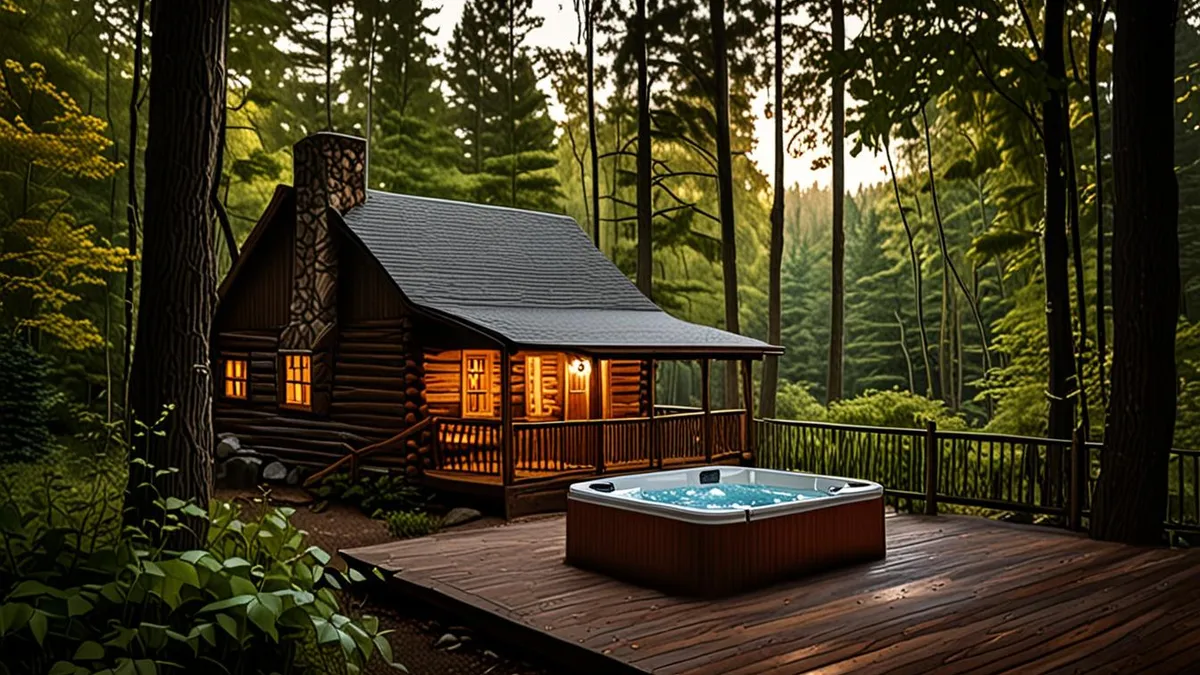
Amenities are where the two stay types diverge most sharply. Cabins in the Smokies typically come loaded with private perks: a hot tub on the deck, a game room with pool or arcade games, a full kitchen, a fire pit out back and, in larger cabins, a theater room with tiered seating. The key point is ownership. When you book the cabin, every one of those amenities is yours alone for the whole stay, available at midnight if you want it.
Lodges flip the model to shared perks. You’ll often find an on-site restaurant, a pool, a spa and guided activities organized by staff, which is hard to replicate in a cabin. The trade-off: private hot tubs are rarer at lodges, and popular shared amenities can get busy at peak times.
The view trade-off
Views deserve their own consideration. Ridge-top lodges often guarantee sweeping mountain vistas right from the common areas, because they’re built precisely to show off the landscape. Wooded cabins trade those panoramic views for seclusion: you may see mostly trees from the deck, but you’ll also hear almost nothing but the creek and the crickets. Decide which matters more to you before you book, because it’s the one amenity you can’t add later.
Location: Gatlinburg, Pigeon Forge or Secluded Woods
Where you stay in the Smokies matters almost as much as what you stay in. The region’s three main base towns each offer a different balance of convenience, atmosphere and privacy, and the right choice depends on how you plan to spend your days. A family chasing morning hikes has different needs than a couple who wants dinner and nightlife within walking distance, so it pays to match your base town to your itinerary before you book anything.
Gatlinburg sits right at the park’s main entrance, which means you can walk to restaurants, shops and attractions from many lodgings and reach trailheads within minutes. That access is hard to beat, especially with the park drawing 12 to 14 million visitors a year and early trailhead parking filling fast. The trade-off is real, though: traffic can crawl along the main parkway during busy periods, and cabins packed close together mean less of that secluded mountain feeling many travelers come for.
Pigeon Forge stretches along a busy parkway a bit farther out and works best for families building their trip around Dollywood, dinner shows and outlet shopping. You’ll typically be around 15 to 20 minutes from the park boundary, so early starts for hiking take a little more planning. The upside is that you’re central to nearly everything the region offers outside the park itself.
- Sevierville sits farther north along the same corridor and generally offers lower lodging prices than Gatlinburg, with big-box stores and groceries nearby for stocking a cabin kitchen before you head into the hills.
- Wears Valley is a quieter valley community between Gatlinburg and Pigeon Forge, known for scenic drives, a slower pace and cabin settings with genuine mountain backdrops rather than neighbors on all sides.
- Secluded ridge and hollow cabins in the areas between these towns can put you 20 to 30 minutes from major attractions, so factor in winding mountain roads and allow extra drive time, especially after dark or in winter.
When to Book: Seasons and Lead Times
Timing your booking well can mean the difference between the ridge-top cabin with the sweeping view and the one left over after everything good is gone. Demand in the Smokies follows a predictable rhythm, and the calendar matters more here than in many destinations. The park draws huge crowds year after year, and that pressure flows straight into cabin and lodge availability in Gatlinburg, Pigeon Forge and the surrounding valleys. If you show up expecting to find a private hot tub and a mountain view a week before a holiday weekend, you will likely be disappointed or paying a premium for whatever remains. Plan the calendar first, then go hunting for the property, and the whole process gets easier and cheaper.
- Identify your season first. Peak demand runs June through August and again during October leaf season, when fall foliage peaks from mid-October to early November. October is the single busiest month of the year, and the most desirable cabins go first. If your dates are flexible, shifting even a week earlier or later can put you in a quieter, better-priced property.
- Reserve peak stays far ahead. For summer and leaf season, plan to book your cabin or lodge 6 to 12 months in advance. Popular large group cabins and view-heavy properties often fill their best weeks first, so the deeper into peak season you wait, the narrower your choices become.
- Use shorter lead times for shoulder seasons. Spring and late fall typically require only 2 to 3 months of lead time, and you’ll often find better availability and more flexible terms. This is the sweet spot for travelers who want good weather without peak-season pressure.
- Plan around minimum stays. Expect 2 to 3 night minimums on weekends and holidays at many cabins, so a one-night stopover usually isn’t realistic during busy periods. Build your itinerary around that minimum rather than fighting it.
- Target midweek winter dates for value. Midweek stays in winter are generally the cheapest and most flexible, with shorter minimums and more negotiable options. Owners and property managers are often open to requests during this stretch.
Once you’ve picked your season, set a reminder and book as soon as your lead-time window opens. Flexibility on your exact dates, even by a day or two, often opens up availability that rigid weekend-to-weekend plans miss. Read cancellation terms carefully before you commit, since long lead times mean your plans may change, and confirm what is included in your rate so there are no surprises at check-in.
Budget Breakdown: What Each Stay Type Costs
Understanding the price structure helps you compare stays fairly. Small cabins typically run roughly $150 to $300 per night, while large group cabins fall in the $300 to $600 range. Lodges start higher, generally from about $400 to well over $1,000 per night, but that headline number can be misleading. The right way to judge any of these options is to look past the sticker rate and ask what you actually get for your money, and who is splitting the bill.
The key is to compare total value, not just the nightly rate. A lodge rate that bundles meals, activities and entertainment can work out cheaper than a cabin plus restaurant bills plus paid attractions. And a large cabin split among a group often beats everything on a per-person basis: divide one $300 to $600 cabin among 4 to 6 couples and the per-couple cost can drop below what a single small lodge room would run. Run this math before you book, because it regularly changes which option comes out ahead.
- Factor in what you save on food. A cabin’s full kitchen lets you cook breakfast and several dinners during your stay, which can easily offset a chunk of the nightly rate for a family.
- Watch for cleaning and service fees. Many cabin rentals add flat cleaning fees and sometimes pet or booking fees, so check the total before comparing two properties side by side.
- Consider per-person math for group trips. A lodge that looks expensive per night may be reasonable once its 10 to 40+ guest capacity is divided up, especially if meals are included.
- Compare with other unique stays. If you’re curious how unconventional lodging prices stack up, see what a treehouse lodge stay actually costs for a useful point of comparison.
Making Your Final Choice
So, which one is yours? If privacy, a private hot tub and cooking your own meals sound like the perfect escape, a cabin is the natural fit. If you’d rather have services, sweeping views and shared facilities for a bigger group, a lodge will serve you better. Match the stay type to your group size first, then lock in your season and book within the lead-time windows covered earlier.
One last thing to weigh before you commit: base-town convenience versus wooded seclusion. Staying close to Gatlinburg or Pigeon Forge means easier access to attractions, while a cabin tucked into the woods around Sevierville or Wears Valley trades drive time for quiet. Get that balance right, and the rest of your Smoky Mountains trip tends to fall into place. If this helped you decide, leave a comment or share the article with your travel crew.