Those photos of geodesic domes sitting in a blanket of snow, glowing warmly from inside, are hard to resist. But if you’ve never booked a dome glamping stay in winter, it’s natural to wonder whether the reality matches the picture. Can a fabric structure really stay warm when it’s freezing outside? Will you sleep well, shower comfortably, and actually enjoy yourself rather than shiver through the night?
The good news is that winter-ready domes are designed for exactly these conditions, with insulation, wood stoves and proper beds. Still, there are quirks to know about before you book. This guide walks you through how the heating works, what to expect when booking and what’s inside, what to pack, the winter activities worth planning, common problems and how to avoid them, and finally, whether a winter dome glamping stay is the right kind of trip for you.
How Warm Is a Dome in Winter? Heating and Insulation Explained
The biggest surprise for first-time guests is how warm a properly set-up dome stays. Most winter-ready domes use thermal liners or a double-layer cover that traps an insulating air gap, holding interiors at roughly 18–22°C even when temperatures drop below zero outside. That’s comparable to a comfortably heated bedroom at home, so you won’t be sleeping in your coat.
The main heat source is almost always a wood-burning stove. At check-in, staff typically show you how to light it and keep it burning safely, and you’ll need to top it up with logs every 2–3 hours to maintain the temperature. It sounds like a chore, but most guests find the routine part of the charm — the stove becomes the centerpiece of the evening.
Backup heating and condensation
Some premium domes add electric underfloor heating or infrared panels as backup, which is especially welcome on cold mornings before you’ve rebuilt the fire. If a cozy wake-up matters to you, ask about backup heating when booking.
One thing to expect: condensation on the transparent panels overnight is completely normal. Warm indoor air meets cold dome surfaces, and moisture forms on the windows. It usually clears quickly once you open the ventilation vents, so don’t panic when you wake up to foggy panels.
Booking a Winter Dome Glamping Stay: Timing, Prices and Minimum Stays
The winter dome season in the UK and northern Europe typically runs from November to March, though exact dates vary by site and weather. Demand is heavily concentrated: December weekends and mid-February weekends book up fastest, often filling months in advance. If your dates are flexible, you’ll find far more availability — and often better rates — outside those peak windows. For a broader look at how seasons affect pricing across the whole year, see this guide to the best time of year for glamping in the UK.
On price, expect to pay roughly £150–£350 per night for a winter dome, which typically runs 20–40% above summer off-peak rates. That premium reflects the extra heating, insulation and staffing that cold-weather operation requires.
Timing your booking matters more in winter than in summer. Book 2–4 months ahead to be safe, and note that popular sites often sell out their December weekends by October. Before you commit, keep these booking details in mind:
- Minimum stays: many sites enforce a 2-night minimum on winter weekends, so a one-night dash is rarely possible at peak times.
- Midweek savings: because weekend demand is so high, midweek stays are usually the budget-friendly option and can be easier to book at short notice.
- Deposit and cancellation terms: winter trips are more weather-dependent than summer ones, so read the cancellation policy carefully before paying.
- Heating arrangements: confirm at booking whether firewood is included and whether staff are on site, since these vary between operators.
Inside the Dome: Layout, Beds and Facilities
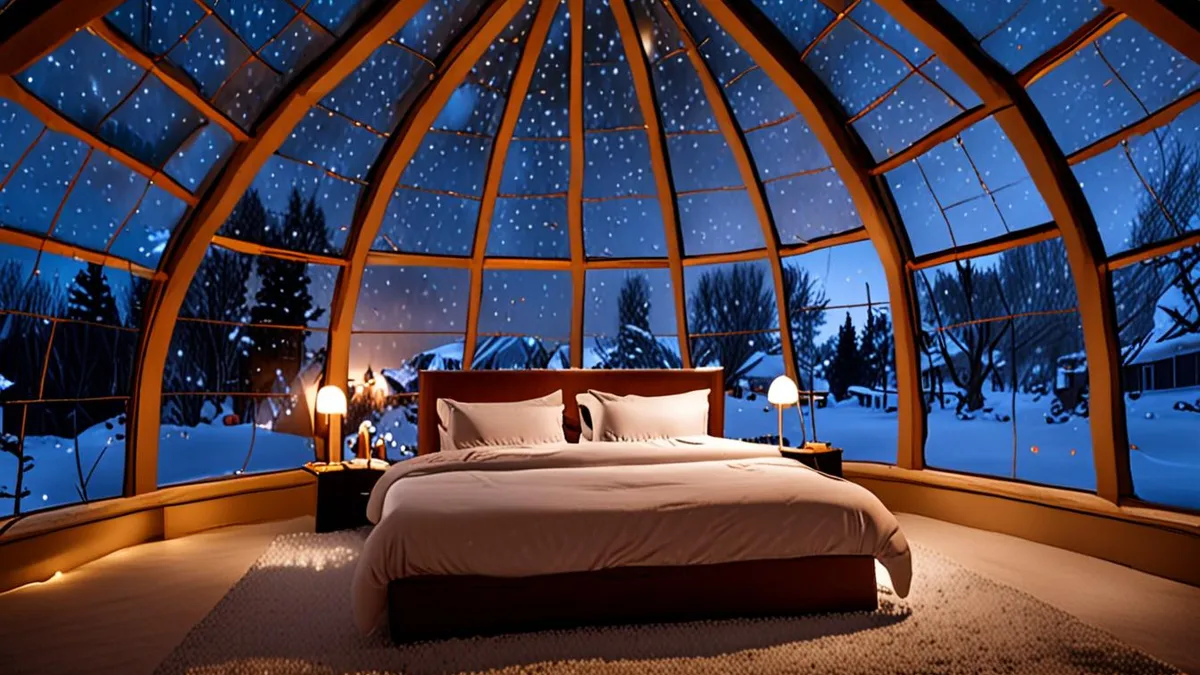
Winter domes are more like small cabins than tents. Typical domes span 5–7 meters across and sleep 2–4 guests, with a proper bed frame and real mattress rather than camp beds. If you’re comparing dome stays with other options, this breakdown of yurts, domes and cabins explains how the accommodation types differ in space and facilities.
Bathrooms and kitchens
En-suite bathrooms with hot showers are common in winter domes, which makes a huge difference when it’s freezing outside. Budget models may instead use a shared facilities block a short walk away — perfectly workable, but you’ll want warm layers and a headtorch for those nighttime trips, so check which setup you’re booking.
On the food front, expect either a small kitchenette with basics for simple meals or a breakfast hamper setup delivered to your dome. Power is deliberately modest: USB charging points and low-watt lighting are standard, so don’t count on running hair dryers or multiple devices.
Sleeping under the stars
The transparent ceiling panels are the signature feature — you can lie in bed and watch the stars, and on snowy nights the effect is unforgettable. The trade-off comes at dawn: bright light bouncing off snow will wake you early, so bring an eye mask if you value a lie-in.
What to Pack for a Winter Dome Stay
Packing for a dome stay in winter is a bit different from a summer glamping trip. Even though most winter domes hold a comfortable indoor temperature, a few small items make a big difference to how cozy you feel from the moment you arrive.
The most common surprise for first-timers is the floor. Even in a well-heated dome, the ground beneath can pull warmth away, so walking barefoot first thing in the morning is less pleasant than you might expect. Warm footwear for indoors is genuinely one of the most useful things you can bring.
You will also spend time outdoors in the dark. Winter evenings arrive early, and many sites are spread out across fields or woodland, so a short walk to the shower block or car park can feel like a proper expedition without the right gear. If you are unsure what else to think about before booking, the practical guide to choosing a glamping site covers the basics well.
- Insulated slippers or thick wool socks: pack a dedicated indoor pair you can slip on at night; soles with grip help on smooth dome flooring.
- A headtorch with spare batteries: paths between domes and facilities are often unlit, and a headtorch keeps both hands free for carrying things.
- Backup matches or a lighter: stoves are usually lit with site-provided supplies, but firelighting fails at the worst moment, so a backup in your pocket saves fumbling.
- Moisturiser and lip balm: wood-stove heating dries the air noticeably overnight, so bring something richer than your everyday hand cream.
Winter Activities Around Dome Sites
Winter days are short this far north, so the golden rule is to plan one main activity per day. If the site sits near snow, that might be a morning of snowshoeing or a gentle winter hike, followed by a slow afternoon and a long evening indoors. Trying to squeeze in two outings usually ends with one of them rushed or abandoned.
Hot tubs and fire pits take over the evenings
In summer, evenings at a dome site might mean barbecues and lawn games. In winter, the evening centrepiece shifts to whatever warmth the site offers. Many dome sites add private hot tubs or fire pits, and these become the thing you actually plan your day around — a soak under the stars after a cold walk is hard to beat. If a private hot tub matters to you, confirm at booking that it is heated and available in winter rather than assuming it is year-round.
Local events and getting there
It is also worth asking the site what is happening nearby. Depending on the region, that could be Christmas markets in December or, in places like northern Scandinavia, a realistic chance of seeing the northern lights from a dark-sky location. Sites usually know the local calendar better than any search result.
Finally, check the access roads before you travel. Some remote dome sites recommend a 4WD vehicle in snowy conditions, while others handle it for you with a designated parking area and a short sled transfer to the dome. Ask in advance so you know whether to rent a suitable car or pack for a walk-in arrival.
Common Winter Dome Problems and How to Avoid Them
Most winter dome problems are avoidable with a little planning. The issues that come up again and again in guest reviews — struggling to light the stove in the dark, cold arrivals, unexpected snow — all come down to timing and communication with the site.
The single best habit is to arrive in daylight. Check-in is typically between 3 and 5pm, and that window exists for a reason: you need light to find your dome, carry your bags across possibly icy ground, and get the wood stove going before temperatures drop. Arriving at 8pm on a dark December evening turns a simple arrival into a stressful one.
Communication matters just as much. Before you book, ask the site directly about the things that vary most between operators, and read reviews from winter guests specifically. Summer reviews rarely mention heating performance, condensation on the panels or how quickly staff respond when snow falls — the exact details that matter most for your stay.
- Ask whether the site is staffed overnight: at self-check-in domes there is no one to call at midnight if the stove goes out, so you need to feel confident with firelighting before you commit.
- Confirm snow clearance and road access policies: if heavy snow is forecast during your stay, ask who clears the access road and parking area, and what happens if you cannot drive in.
- Filter reviews by season: look for reviews posted between November and March and search them for words like “stove”, “warm” and “condensation” rather than relying on the overall rating.
- Check what happens if you arrive late: some sites leave a key or code, others expect you to call ahead, so know the late-arrival procedure before travel day.
Is a Winter Dome Glamping Stay Right for You?
Those snowy dome photos are tempting for a reason — and the good news is that a well-run winter dome really does deliver. Proper insulation keeps things comfortable even when it’s freezing outside, and you get a wood stove, a real bed and often your own bathroom, so the coziness is genuinely part of the deal rather than a marketing promise.
Think of it as a proper winter trip rather than a novelty. The sites that get it right treat cold-weather glamping seriously: staffed check-ins, clear guidance on the stove, and practical touches like firewood delivery and cleared paths. The ones that don’t tend to show up quickly in guest reviews, so it pays to read recent winter feedback before you commit.
If you can accept the quirks — tending the fire, a little condensation on the panels, dark walks between dome and car park — a winter dome stay is one of the most rewarding ways to enjoy the cold season. Have you tried one? Share your experience in the comments, or pass this article to a friend who needs a winter escape.